A motorhome stands for freedom on wheels – but reality shows: Not every motorhome offers true independence. Large luxury liners promise maximum living comfort, but massively restrict mobility due to their size and weight. Compact off-road campervans, on the other hand, open up routes that classic motorhomes can never reach. So the question is not: which vehicle is better? But rather: Which way of traveling suits your life?
Inhaltsverzeichnis
What is a motorhome – and what types are there?
The term motorhome covers various vehicle classes: from compact panel vans and semi-integrated models to fully integrated luxury liners. They are all united by the idea of mobile living. However, the differences in size, weight and off-road capability have a fundamental impact on the travel experience.
Large motorhomes focus on living space. They offer space for several people, spacious kitchens, full bathrooms and separate sleeping areas. The design is based on the idea of an apartment on wheels. The result: vehicles 7 to 9 meters long, 2.30 meters wide and weighing 3.50 tons. Mobility becomes a compromise.
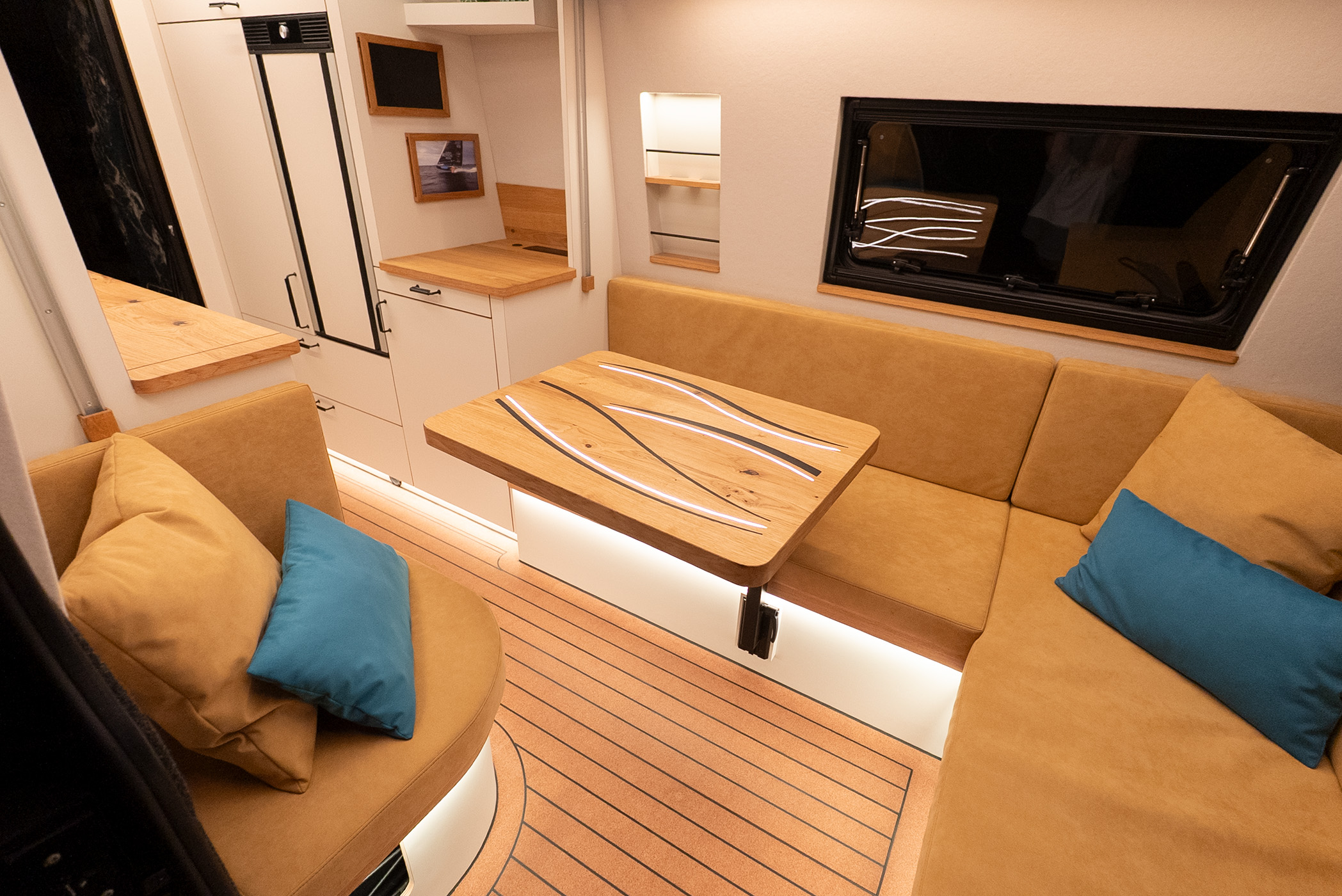
Compact campervan motorhomes are based on vans such as the Mercedes Sprinter, VW Crafter or Fiat Ducato. They combine functionality with mobility. The interior is well thought out, but not oversized. There is room for the essentials – bed, kitchen, storage space. The focus is on flexibility, not living space.
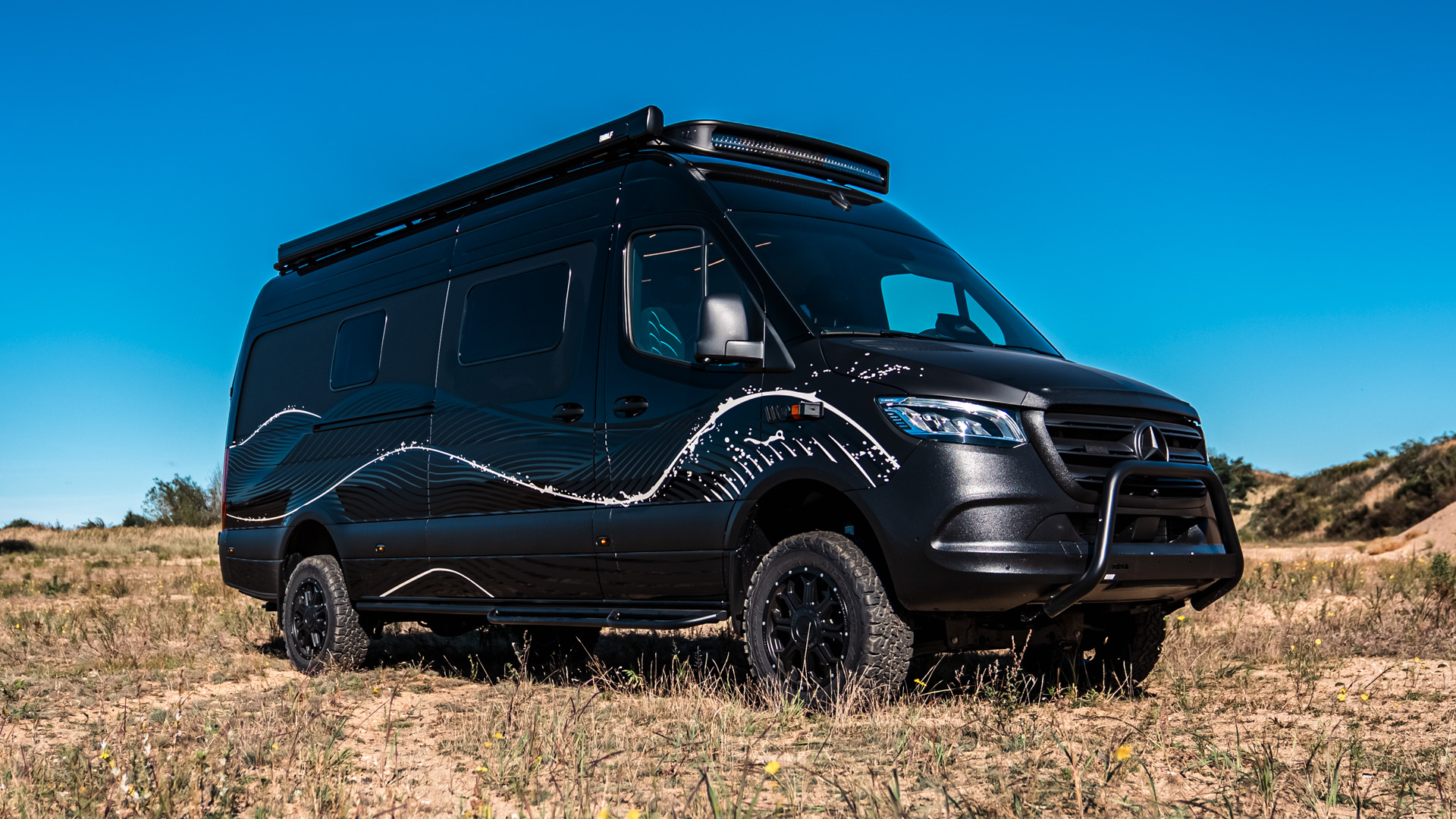
Off-road motorhomes add real off-road capability to the concept. All-wheel drive, increased ground clearance, reinforced chassis and robust tires make them fit for unpaved roads. You can reach remote beaches, lonely mountain passes and wild campsites far away from traditional infrastructure. This model combines living comfort with adventure.
Motorhome vs. off-road campervan: two travel philosophies
Large motorhomes stand for a clear travel philosophy: comfort takes center stage. Anyone who spends a lot of time in the vehicle appreciates room height, wide seating areas and full sanitary facilities. These vehicles are suitable for long-term trips to campsites or longer stays in one place. Mobility takes a back seat – large liners are primarily homes on wheels.
Off-road campervans take a different approach. They are built for travelers who are looking for paths off the beaten track. The focus is on spontaneity, independence and experiencing nature. The living space is functional, but not luxurious. This opens up access to places that remain inaccessible with large motorhomes.
The choice between the two worlds depends on a simple question: Are you traveling to discover new things – or are you traveling to live comfortably?
Why off-road campervans offer real freedom
Independence through off-road capability: an off-road campervan takes you where motorhomes don’t even come close. Remote beaches, narrow mountain passes, unpaved forest paths – the all-wheel drive, increased ground clearance and robust tires make all the difference. Large motorhomes stay on asphalt and paved gravel roads. An off-road campervan goes further.
Maneuverability despite size: large motorhomes are impressive – but also bulky. Narrow old town alleyways, narrow mountain roads or spontaneous turning maneuvers become a challenge. A compact camper van remains agile despite its good use of space. It finds parking spaces more easily, maneuvers safely on narrow roads and is easy to steer through unfamiliar regions. You are not tied to designated camper van sites.
Suitability for everyday use and vacations: Many large motorhomes are only suitable for vacations. They are impractical for everyday use: too wide for normal parking spaces, too high for underground garages, too heavy for spontaneous trips. An off-road campervan, on the other hand, is versatile – as a second vehicle for weekend trips, for city breaks or as a flexible everyday companion. The driving behavior remains similar to that of a car, the handling uncomplicated.
Robustness for real off-road terrain: off-road campervans are technically designed for heavy-duty use. Reinforced axles, raised chassis, underride protection and off-road tires are standard equipment. Large motorhomes are primarily built for roads – the huge bodies are sensitive to potholes and twisting. A campervan is forgiving of mistakes, a luxury liner is not.
Lower costs: An off-road campervan is significantly cheaper to buy and maintain. Less weight means lower fuel consumption, cheaper wearing parts and lower repair costs. Pitch fees are also lower – many campsites charge according to vehicle length. Large motorhomes are luxury items with corresponding running costs.
When a large motorhome is the better choice
Fairness is important – because large motorhomes have real strengths that are decisive for certain travel styles.
Maximum living comfort: large motorhomes offer living spaces of up to 35 square meters. Large kitchens, real bathrooms with showers, separate sleeping areas and huge seating areas create a quality of living that a campervan cannot match. Anyone who wants to live on the road – with the comfort of an apartment – will find ideal conditions here.
Longer stays without compromise: Large motorhomes are perfect for wintering or long-term trips. Enormous interior height, plenty of room to move around and a generous room layout make longer stays pleasant. Winter-proof insulation and large-volume heating systems ensure comfort even in sub-zero temperatures. A campervan is functional – but not a small home.
High self-sufficiency for stationary travel: Large motorhomes often have huge water tanks (100+ liters), large waste water tanks, powerful battery banks and extensive solar panels. They are ideal for long stays in one place – without constant waste disposal trips or water supply.
Rear garages for equipment: Many motorhomes have large garages that can accommodate e-bikes, scooters, SUP boards or outdoor equipment. This makes them perfect for travelers who want to move around without the main vehicle. A campervan does not offer this capacity.
VANME: Individual campervan solutions from Hamburg
VANME is a campervan manufacturer from Hamburg. We combine clear design with craftsmanship and build interiors that feel like a real home away from home – individually planned, implemented to a high standard and designed for long journeys.
Our campervans are based on robust base vehicles such as the Mercedes Sprinter or VW Crafter. Each extension is tailor-made – adapted to your travel plans, usage habits and ideas. Whether minimalist for weekend trips or fully equipped for long-term travel: We plan individually.
We make a conscious choice of materials. Wood from sustainable forestry, high-quality upholstery, durable technology. Our furniture is made in Hamburg – with attention to detail. Every drawer closes neatly, every edge is finished, every surface treated.
We install the technology professionally: lithium batteries, solar modules, parking heaters, water systems – all coordinated with each other. We also take care of the TÜV inspection and supply all the documents required for registration as a motorhome.
Buying a motorhome: What does which vehicle class cost?
The cost of a motorhome varies considerably – depending on the type, size and equipment.
Compact campervans: Well-equipped panel vans start at 120,000 to 450,000 euros (new vehicle with conversion). Used models in good condition start at 50,000 to 250,000 euros. This category offers the best value for money for flexible travelers.
Semi-integrated motorhomes: This mid-range model costs between 70,000 and 100,000 euros when new. They offer more space than panel vans, but remain reasonably maneuverable. Second-hand prices range from 40,000 to 70,000 euros.
Fully integrated luxury motorhomes: Large liners start at 100,000 euros and quickly reach 250,000 to 950,000 euros. These vehicles offer maximum comfort, but are also the most expensive to purchase and maintain.
Off-road motorhomes: Professionally equipped four-wheel drive campervans start at 80,000 euros and can cost 120,000 to 480,000 euros depending on the technology and equipment. The investment is worthwhile for travelers who want to combine off-road capability with living comfort.
Which motorhome suits your style of travel?
The decision for a motorhome depends on how you want to travel.
Choose an off-road campervan if:
- Flexibility and spontaneity are important
- You want to reach remote places
- Real outdoor adventures are part of your travel plans
- Everyday and vacation use should be combined
- You don’t want to be dependent on infrastructure
- maneuverability and easy handling are crucial
Choose a large motorhome if:
- Maximum living comfort is a priority
- You want to stay in one place for a long time
- Plenty of space needed for several people
- You mainly stay on campsites
- Mobility is less important than a sense of space
- Budget for acquisition and maintenance is generous