


Table of contents
Retrofitting a pop-top roof, what’s the point?
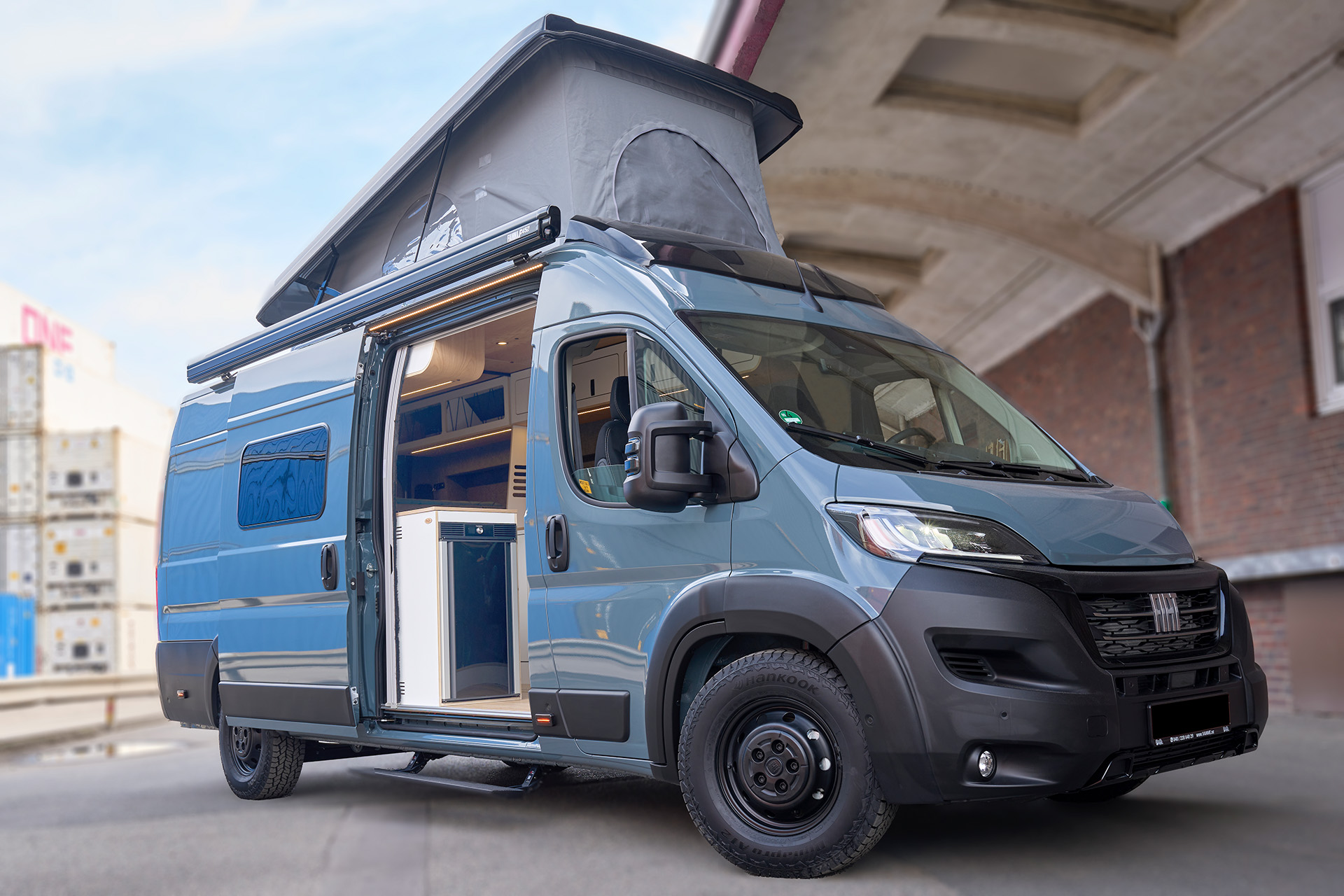
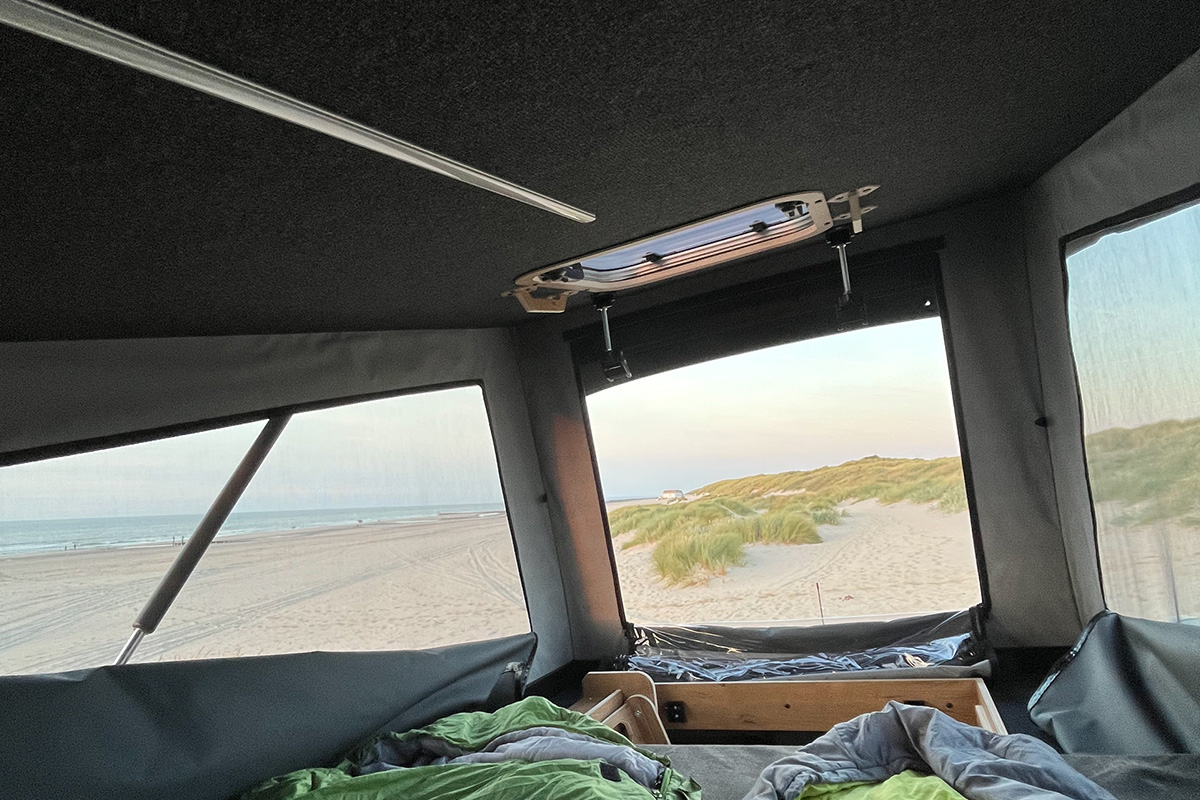
In a nutshell: more space and freedom. On small vans, it first of all allows you to stand upright in the vehicle. In large vans, such as a Mercedes Sprinter H3L2, in which you can stand upright in the vehicle by default, you have a comfortable sleeping area with an elevated view of the surroundings.
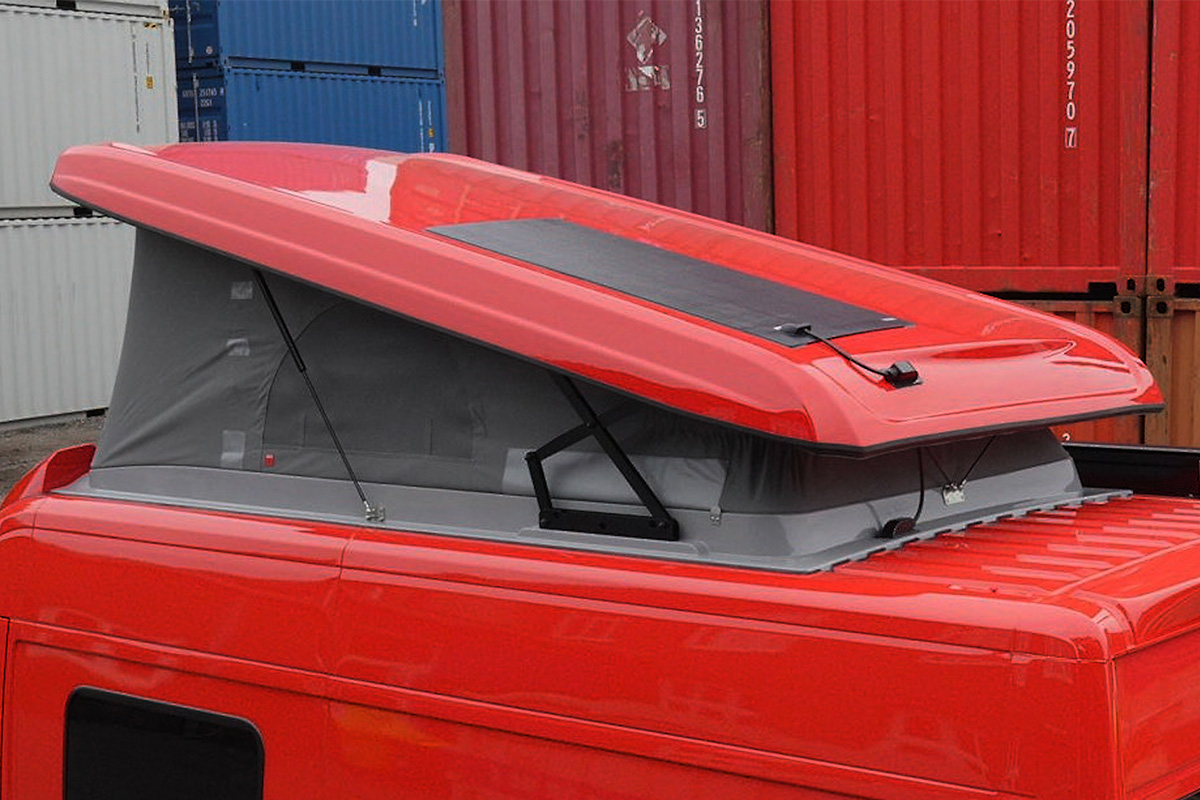
A pop-up roof is usually made of glass fiber reinforced plastic (GRP) or aluminium. Depending on the size of the vehicle, an access opening is cut into the roof of the vehicle during installation or, in the case of small vans, the entire roof cut-out is sawn out directly. Reinforcing frames are attached to the cut openings to ensure that the safety and torsional rigidity of the vehicle is maintained after assembly. After the pop-up roof has been retrofitted and adapted to the vehicle contour of the base vehicle, we also fit a spoiler to minimize driving noise.
Basic vehicle requirements for retrofitting a pop-top roof
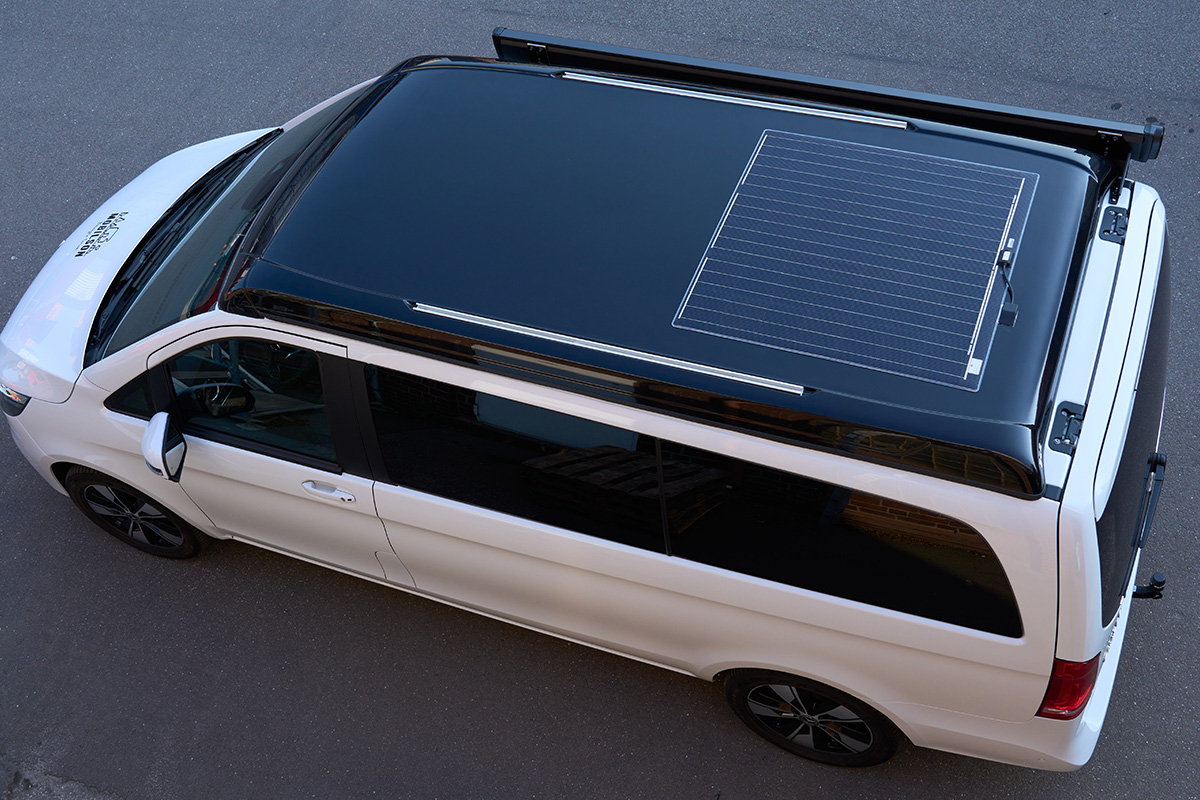
- In principle, the base vehicle must not have a sliding or panoramic roof. These two ex-works installations change the basic design of the vehicle and the certificates no longer apply. Roof racks or other technical installations on the roof are less problematic. These simply have to be removed before a pop-up roof can be retrofitted. The same applies to any existing roof hatches, fans or framed solar panels. Flexible solar panels can then be mounted on the pop-up roof.
- The base vehicle must not be too heavy. A pop-top roof weighs 85-150 kg depending on the model. The weight of a fitted pop-top roof counts towards the technically permissible total mass. Find out in advance what is possible and/or contact us.
- For some vehicle brands, the pop-up roof is only available for certain vehicle lengths. A little research is required here, or alternatively a brief consultation with a specialist workshop such as VANME.
- Is an awning installed on the base vehicle? Existing awning adapters or even the awning model may need to be changed.
Other size requirements: For small vans (VW Bus and Co.), the vehicle must always have a height of 1. For large panel vans, pop-up roofs are only available from length 2 and the vehicle must have height 2, i.e. the high roof made of sheet metal. Otherwise, installation is not possible.
Have a pop-top roof retrofitted by a professional
As you can imagine from everything we have described above, a lot can go wrong when retrofitting a pop-top roof. A roof cut-out that is too large or the unintentional destruction of the vehicle’s stability are horror scenarios that no campervan owner wants to experience. At VANME, the work is therefore only carried out by trained specialists and approved directly on site by the Dekra or TÜV-Hanse test centers at our premises. The certificates are issued on site, printed out and handed to the customer on collection.
When fitting a pop-up roof, either the entire original sheet metal roof or static elements are removed, as already described. At VANME, this is only done with tools that produce a coarse chip. This is necessary so that the material can be removed cleanly. Residues of metal dust or chips lead to corrosion and can, for example, interfere with technical components such as parking sensors with their magnetic fields.
The necessary structural stability of the vehicle’s roadworthiness is no longer ensured by this intervention. For this purpose, reinforcing frames are inserted into the respective cut-outs. These reinforcements are glued and riveted with construction adhesives. All the requirements of the expert opinion are meticulously fulfilled or exceeded.
Not only static components, but also the roof shell and the spoiler are only fixed to the vehicle with construction adhesive. During the bonding process, it is essential for a good result that the correct materials are used and, above all, that the adhesive is given time to set properly. In the area of the spoiler and the reinforcement frame, several centimeters thick adhesive dots are sometimes placed. At a room temperature of 23 degrees, the material needs several days to dry completely. Make sure that your vehicle is parked in a heated hall for several days during such an installation.
Orders that take 24-32 hours from acceptance to delivery should be rejected. Of course, the time also costs money, no question about it. But if such an operation goes wrong, the vehicle is scrap.
Another special feature of our company is that the contour of every vehicle with an inner roof is adapted to the pop-up roof and a clean transition is created with a profile.
We always ensure that our work is carried out and handed over to the best of our knowledge and belief.
Manufacturers whose pop-up roofs VANME retrofits
We are installation partners of the SCA and Campany brands. Both manufacturers meet the highest quality and safety standards on the German market and impress with innovative features or functions in their products.
SCA
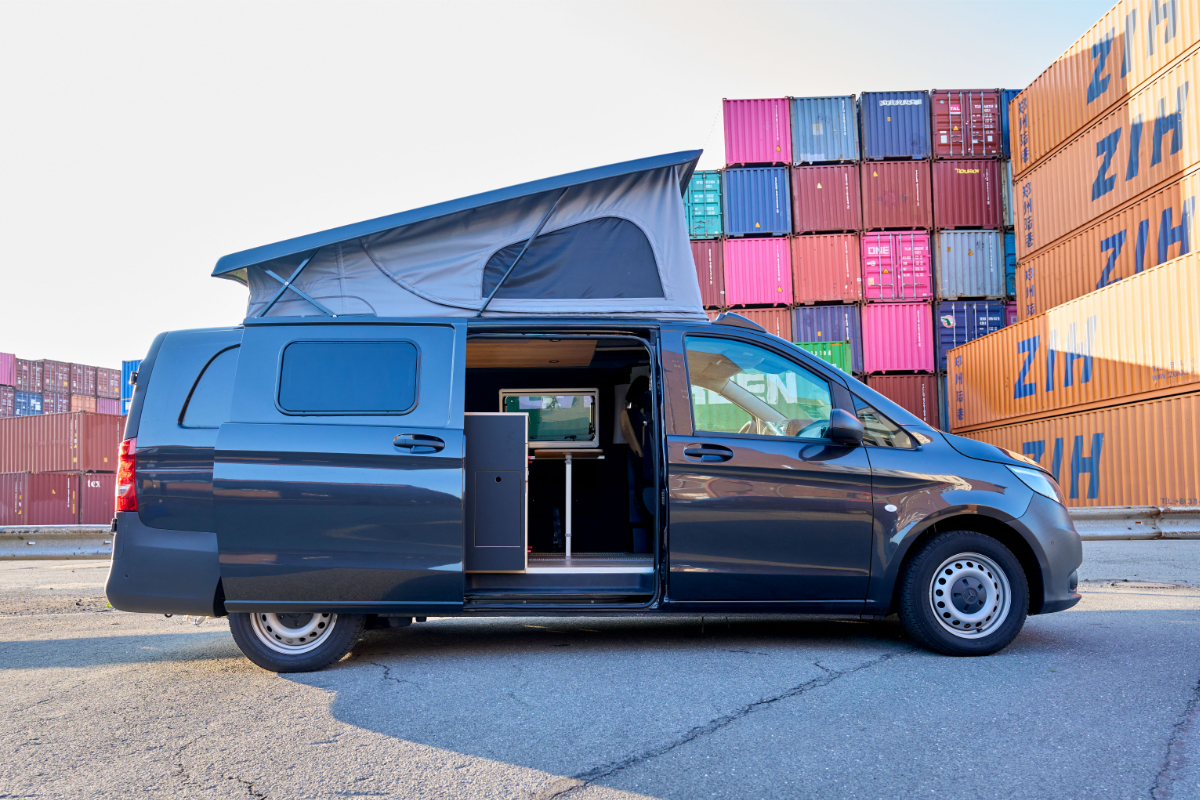
With its entire product range, SCA is a major player on the German market for GRP molded parts and has been supplying companies like ours with high-quality pop-up roofs for years.
From SCA we offer the installation of pop-up roofs for the following models:
- VW Bus (Transporter, Multivan)
- Mercedes V-Class
- Merecedes Vito
- Ford Transit
- Ford Transit Custom
- and other models on request
Costs for a pop-up roof from SCA: €8,200-11,900 gross incl. materials, installation and TÜV approval



Campany
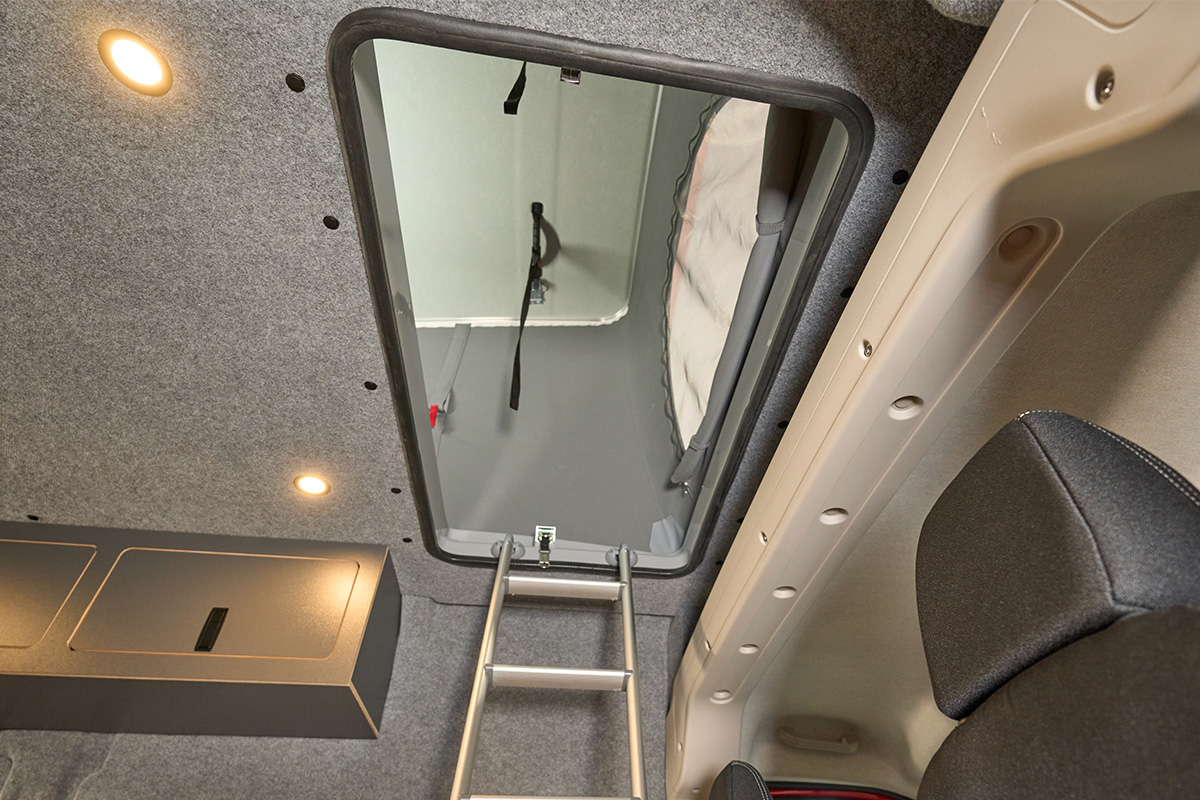
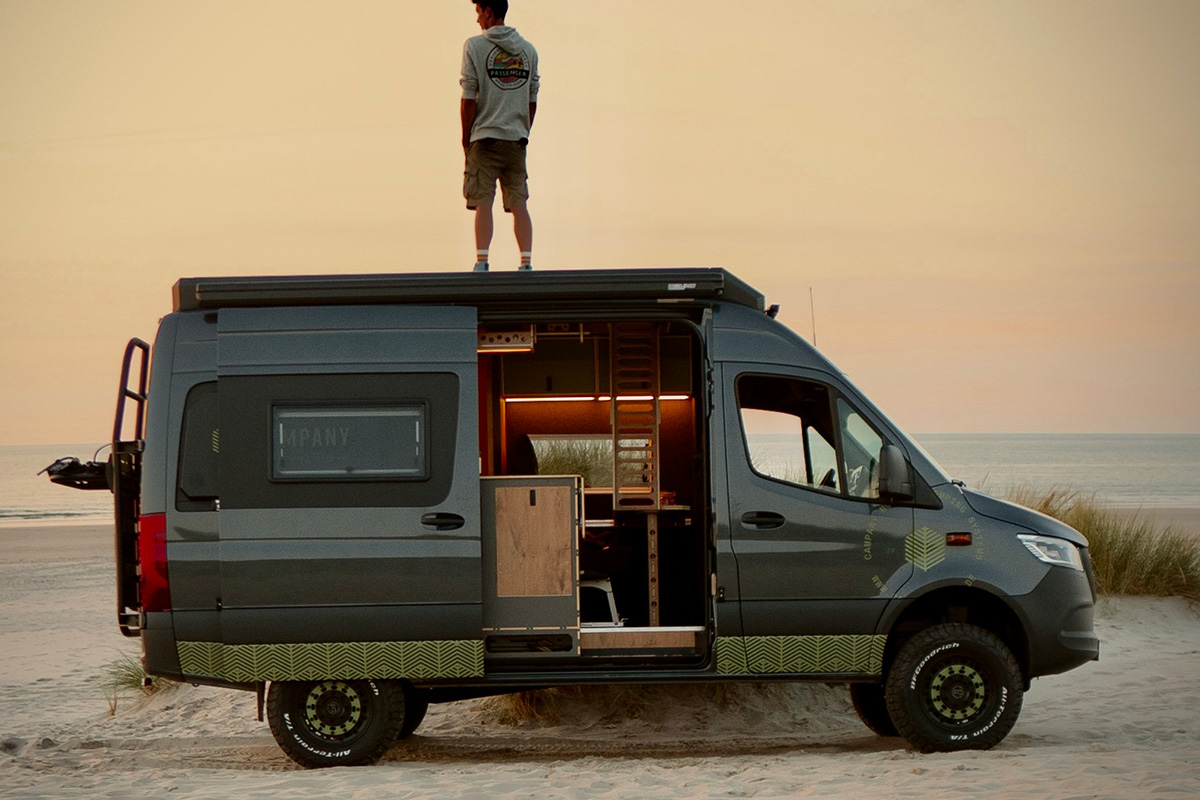
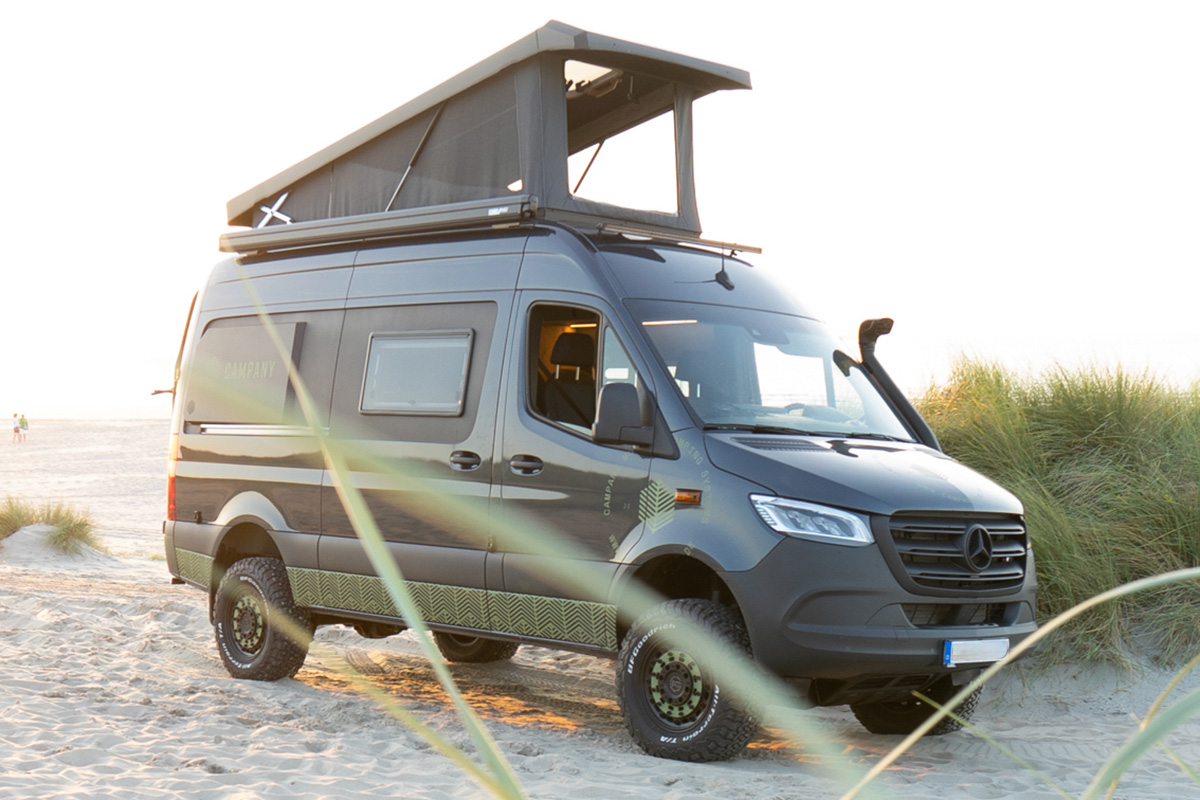
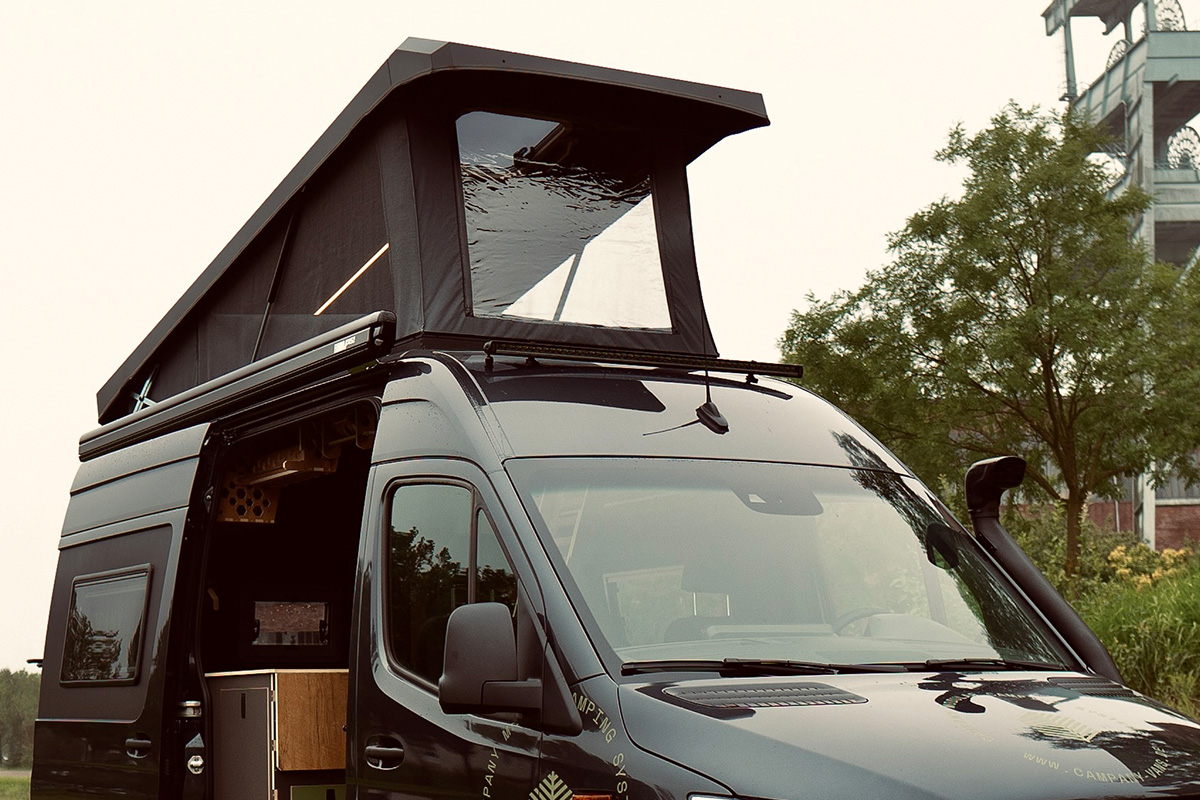
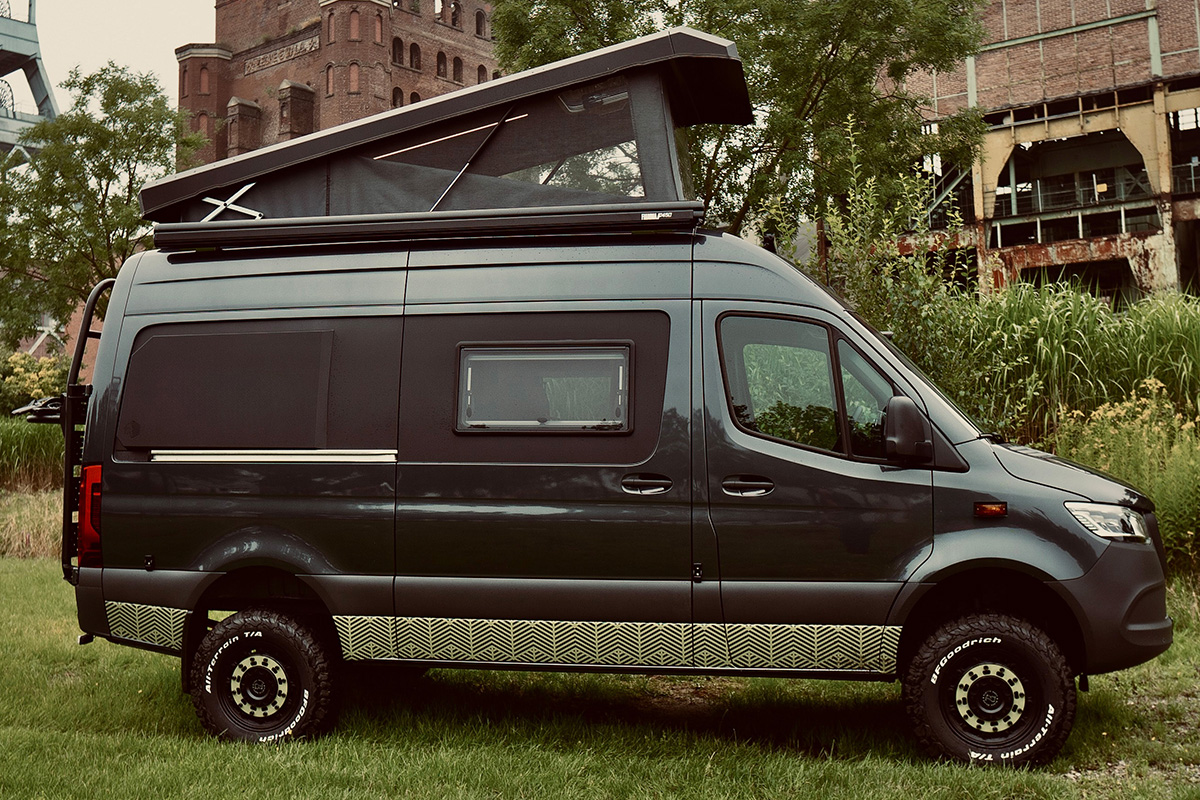
Campany is a young, innovative company that actually focuses on vehicle interiors. The founder of the company has recognized the need that there is still no easy, accessible, i.e. actually well thought-out pop-up roof for the usual large panel vans. We are now pleased to be able to offer this roof to private customers as a conversion partner for northern Germany.
We offer the installation of roofs from Campany for the following models:
- Sprinter L2, L3 and L4 with height 2
- Crafter / TGE L2, L3 and L4 with height 3
Costs for the Campany pop-top roof: from approx. €12,000 gross incl. materials, assembly and TÜV approval
Conclusion
Retrofitting a pop-top roof is an investment. In this case, your return on investment is more freedom and sleeping comfort.
It changes the structure of the base vehicle and cannot be reversed, especially in small vans with a full roof cut-out. However, for these in particular, it is an absolute gain in terms of headroom.
Two additional sleeping berths are created by using an area, the roof, that would otherwise remain unused. Two separate rooms are created in both vehicle types. A pop-top roof turns the panel van into a camper van.
Frequently asked questions
Retrofitting a pop-top roof is a big decision – and one that should be made well-informed. Here we answer the most frequently asked questions about retrofitting.