There are places you won’t find on any route planner app. Hidden bays in Albania, high plateaus in Morocco, forest clearings somewhere in Scandinavia. If you want to reach such places, you need more than a normal campervan – and this is exactly where the off-road camper comes into play.
Inhaltsverzeichnis
What makes an off-road camper?
At its core, an off-road camper is an all-terrain touring vehicle that combines two worlds: the robustness of a real off-road vehicle with the comfort of a mobile home. Unlike classic motorhomes, which rely on campsites and paved roads, an off-road camper is built for unpaved tracks, gravel, mud and stony mountain paths.
That sounds like marketing-speak at first, but the difference becomes apparent at the latest when you are standing in front of a washed-out slope and wondering whether you can continue. With a conventional panel van, this is usually the end of the road. An off-road camper keeps going.
The technology behind it: What makes an off-road camper different?
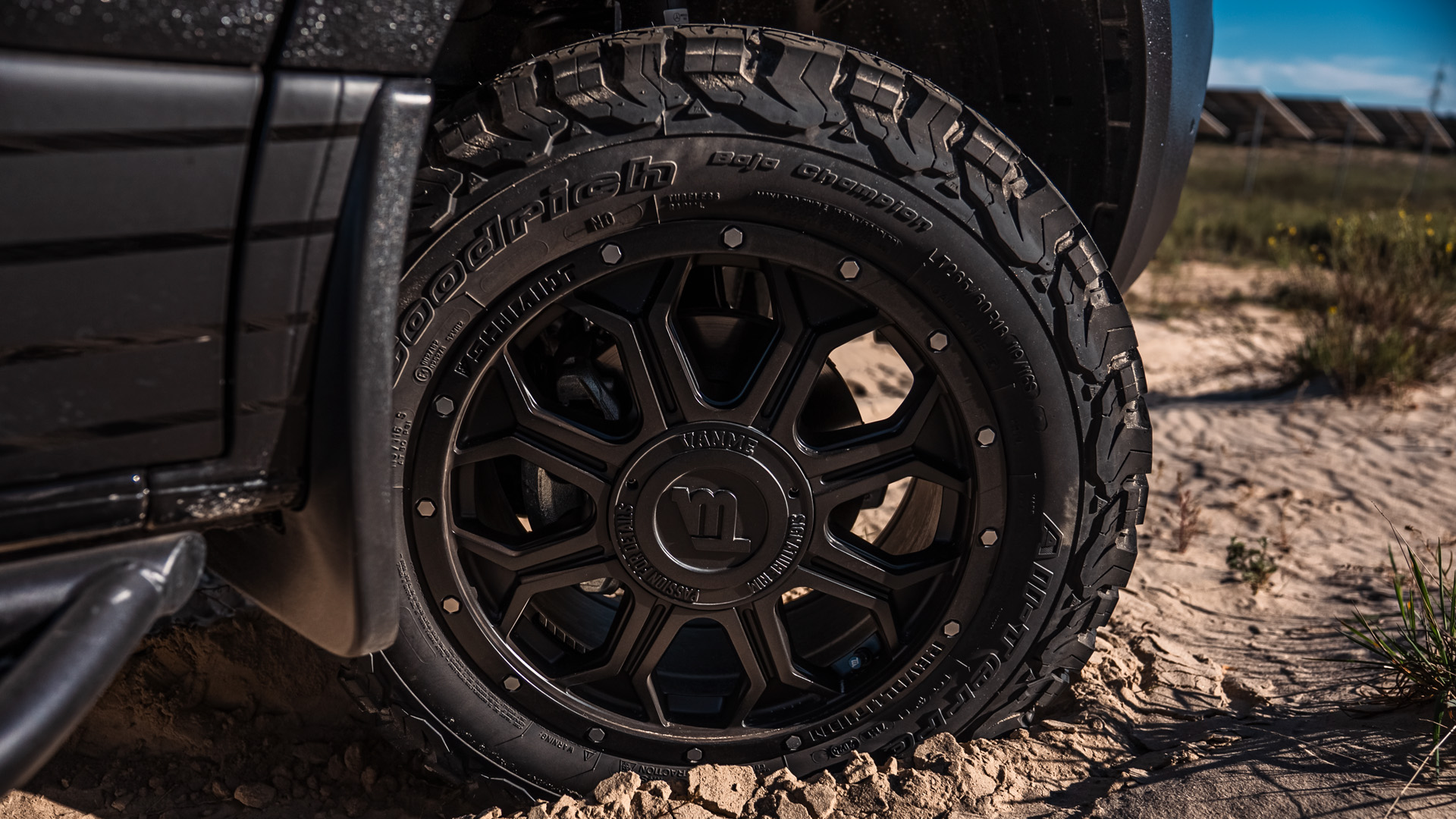
What is the technical difference between an off-road camper and other campers? All-wheel drive (4×4) is the basis, but by no means everything. There are also differential locks that prevent a spinning wheel from eating up all the traction. A gear reduction helps on extreme inclines or if you get stuck in sand. Increased ground clearance protects the underbody from stones and obstacles. And robust off-road tires with a coarse tread ensure that you get grip in the first place.
All this sounds technical – and it is. But these details decide whether you arrive at your dream spot or have to turn around three kilometers beforehand.
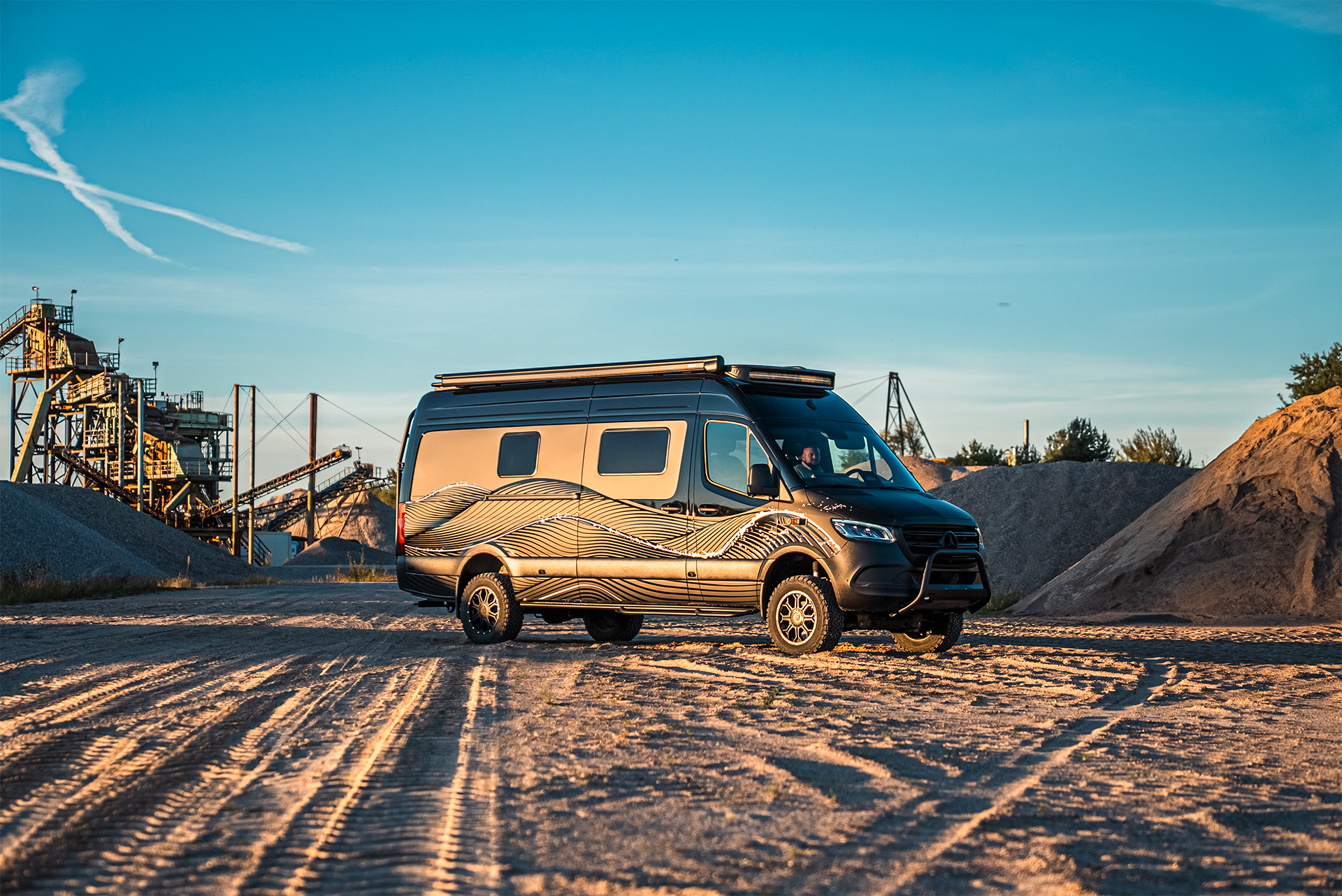
The good thing is that many of these off-road features can also be used in panel vans such as the Mercedes Sprinter 4×4, the Volkswagen Crafter 4Motion or the Iveco Daily 4×4 ex works – or retrofitted. This gives you real off-road capability in a vehicle that you can drive with a normal driving license (category B up to 3.5 tons) and that can easily pass through any city centre.
Popular base vehicles: from the Defender to the all-wheel drive panel van
The choice of base vehicle is probably the most important decision when it comes to off-road campers. And this is where opinions differ – sometimes quite passionately.
The Land Rover Defender (the old models before 2020) is considered by many to be the epitome of off-road travel. Ladder frame, simple technology, legendary off-road capability. The downside: limited payload, limited space and a spare parts supply that sometimes turns into a paper chase outside Europe.
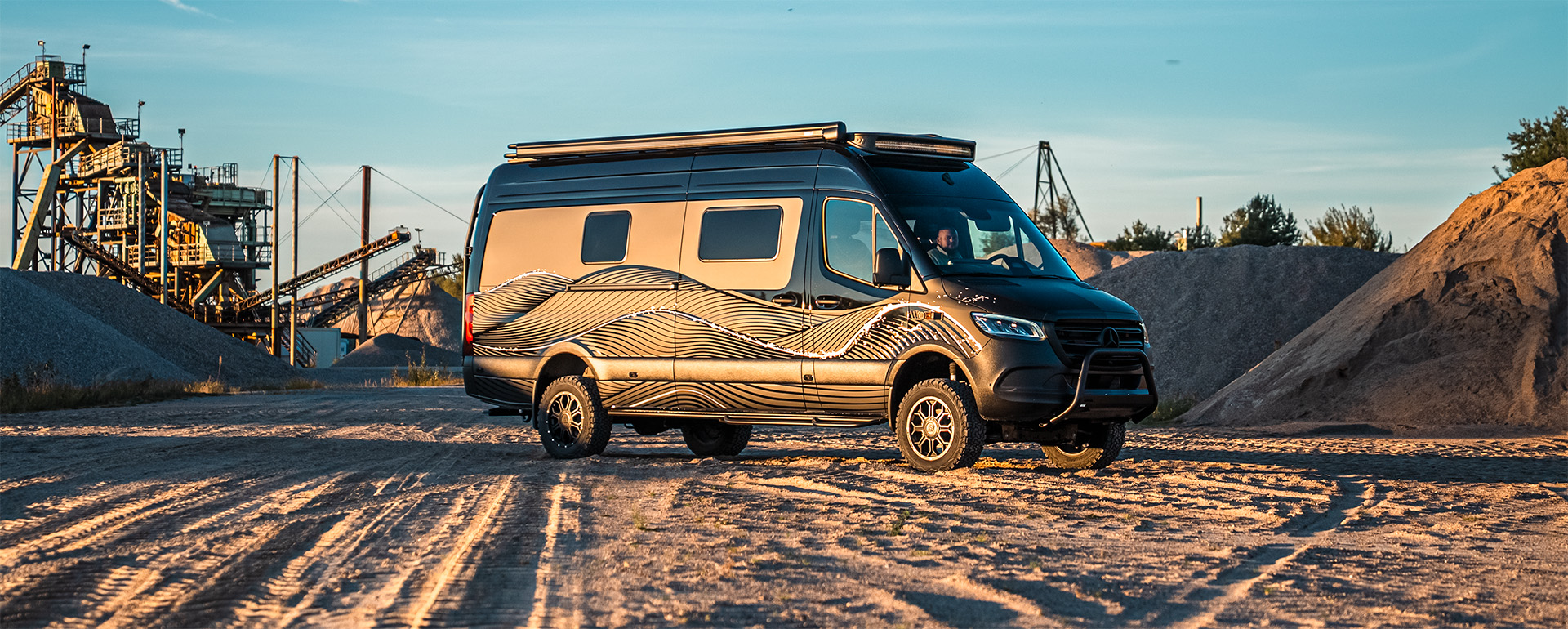
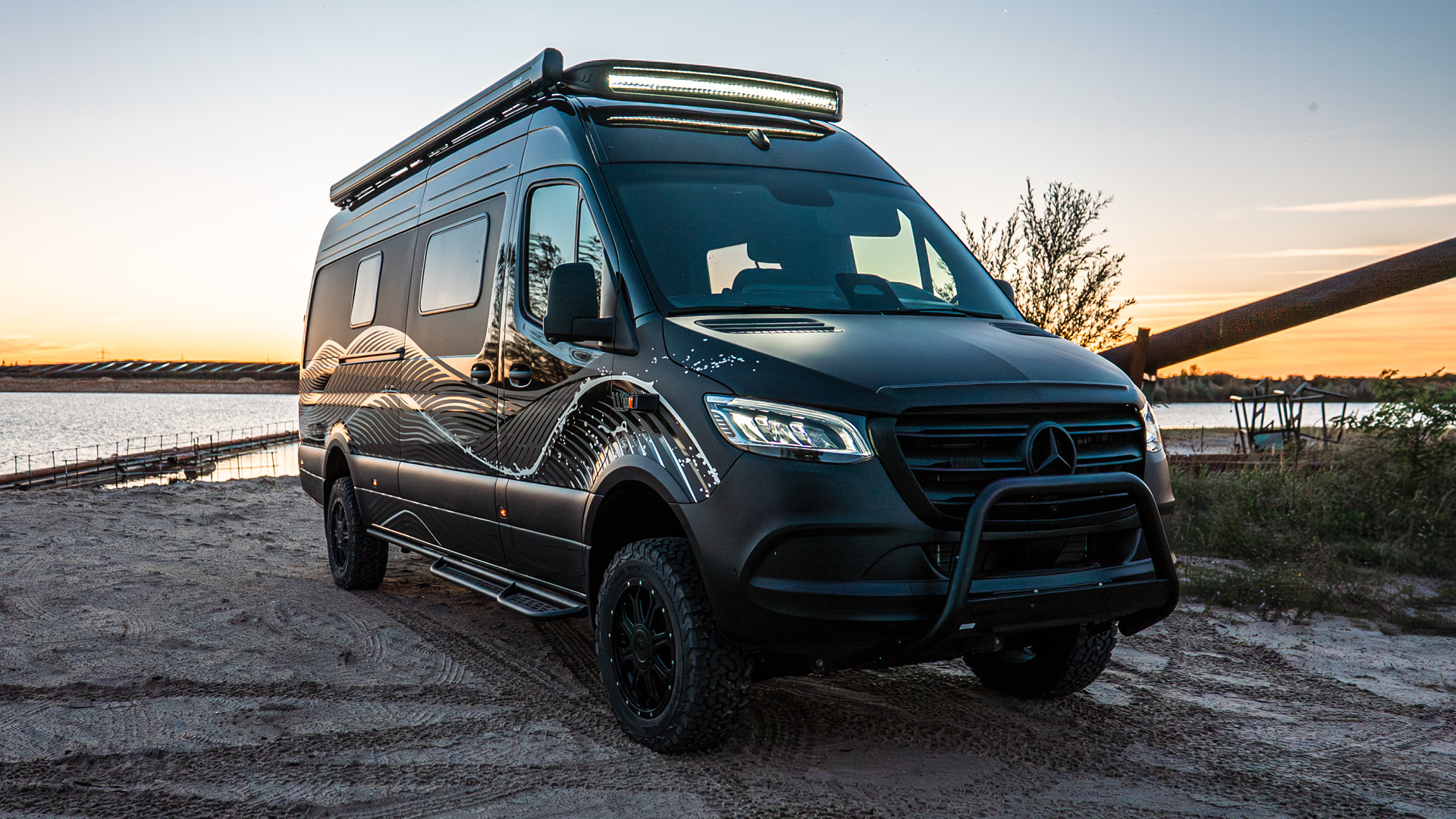
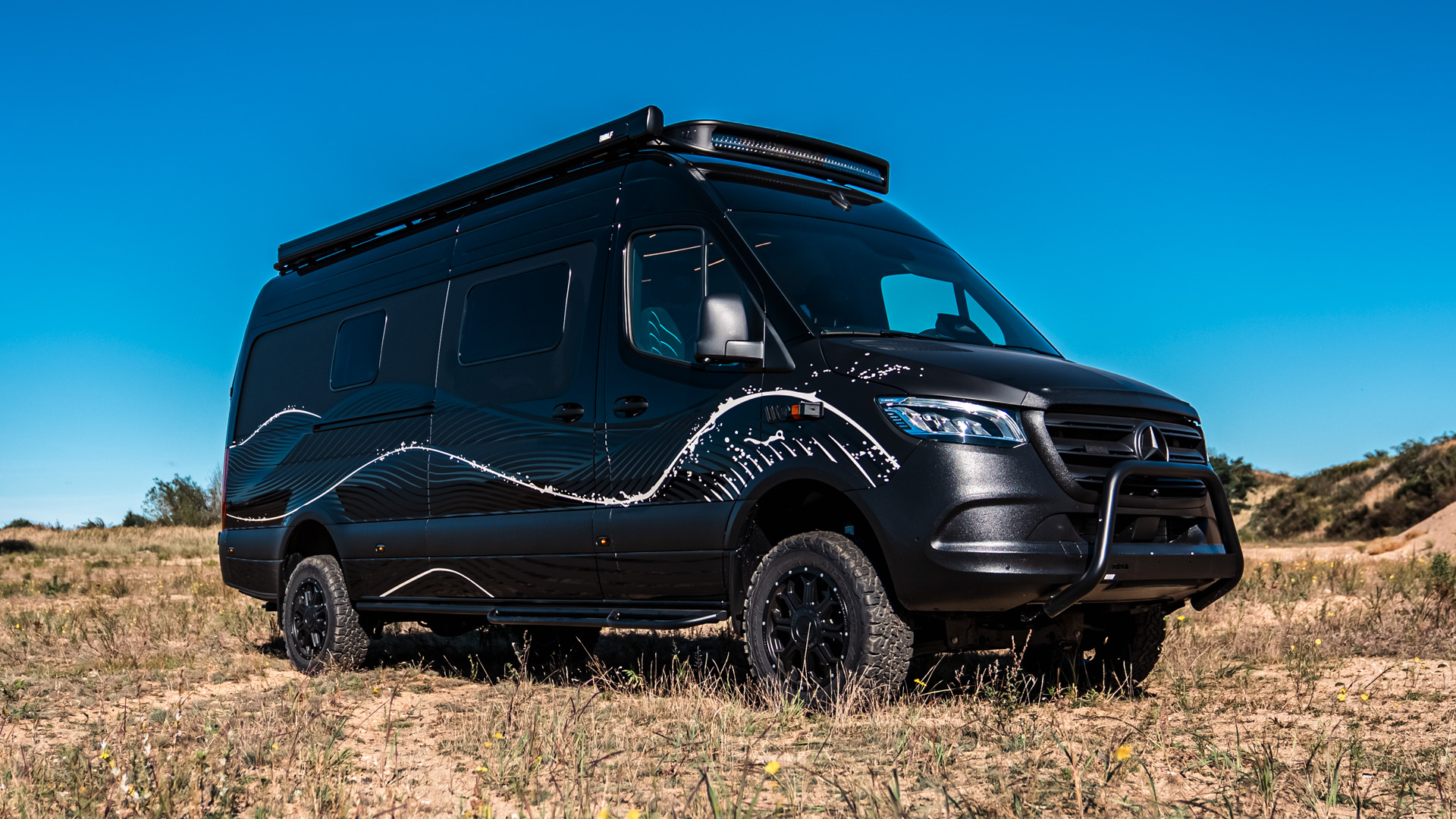
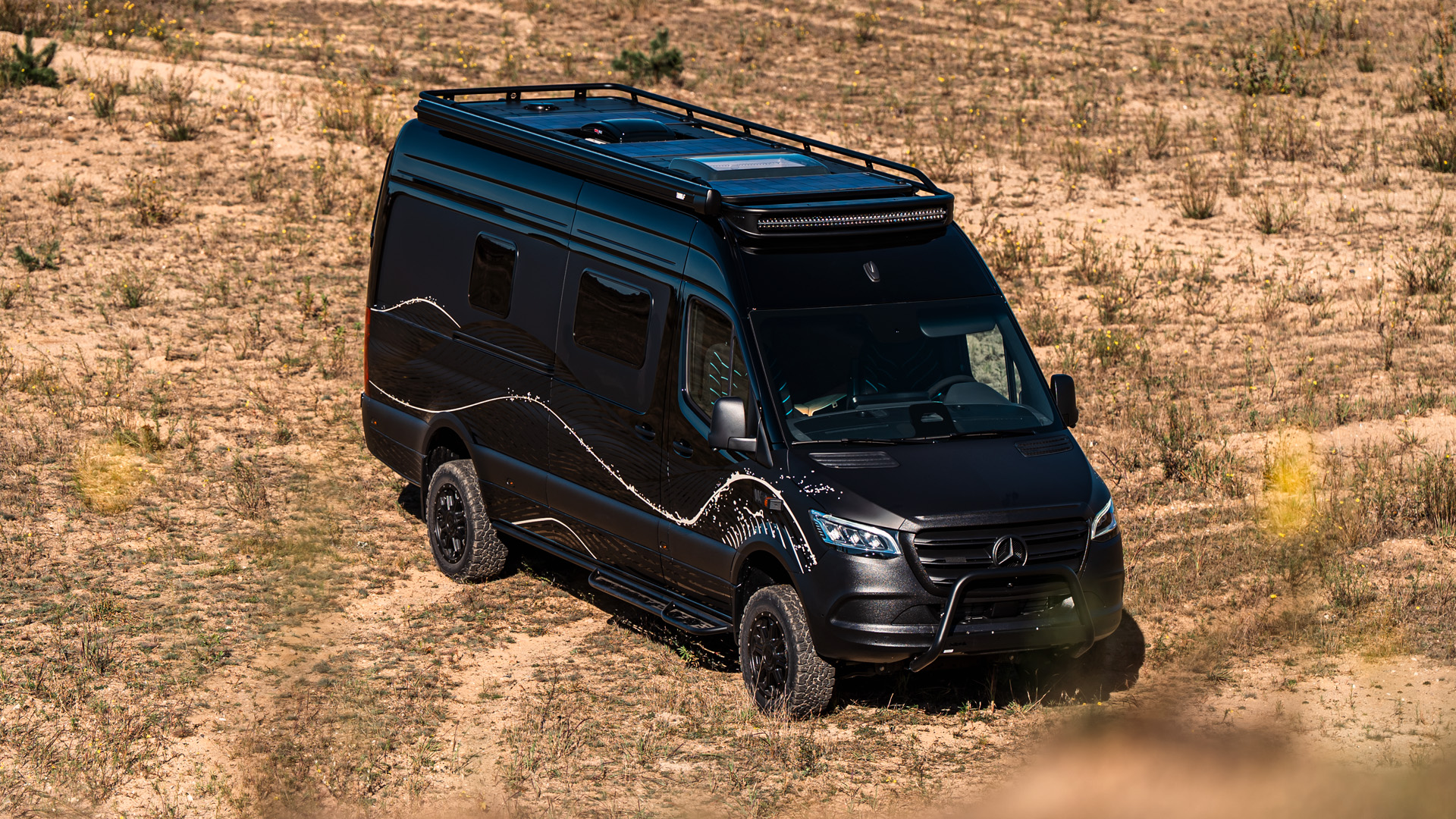
The Mercedes Benz Sprinter with all-wheel drive is one of the most popular platforms for a modern off-road camper. It combines robust 4×4 technology with a high level of driving comfort, plenty of space and excellent long-distance capability.
At the other end of the spectrum are the heavier calibers: Unimog, MAN KAT or Steyr. These vehicles offer a massive payload and space for full cabins, but are also correspondingly expensive, difficult to drive, require a truck driver’s license (class C) and consume considerably more fuel. They stand out on normal roads, become a problem in city centers and spontaneous trips to the bakery are an expedition in themselves.
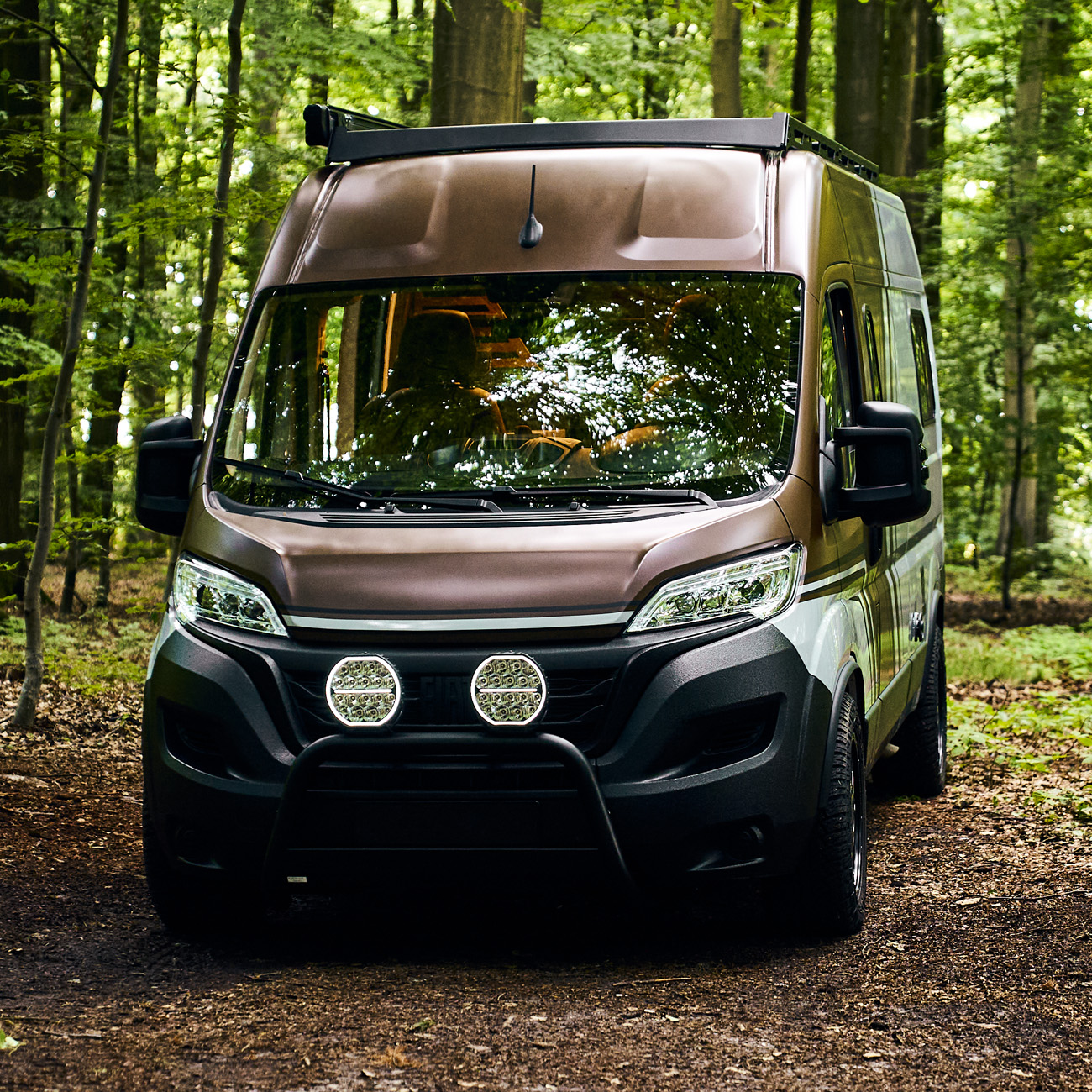
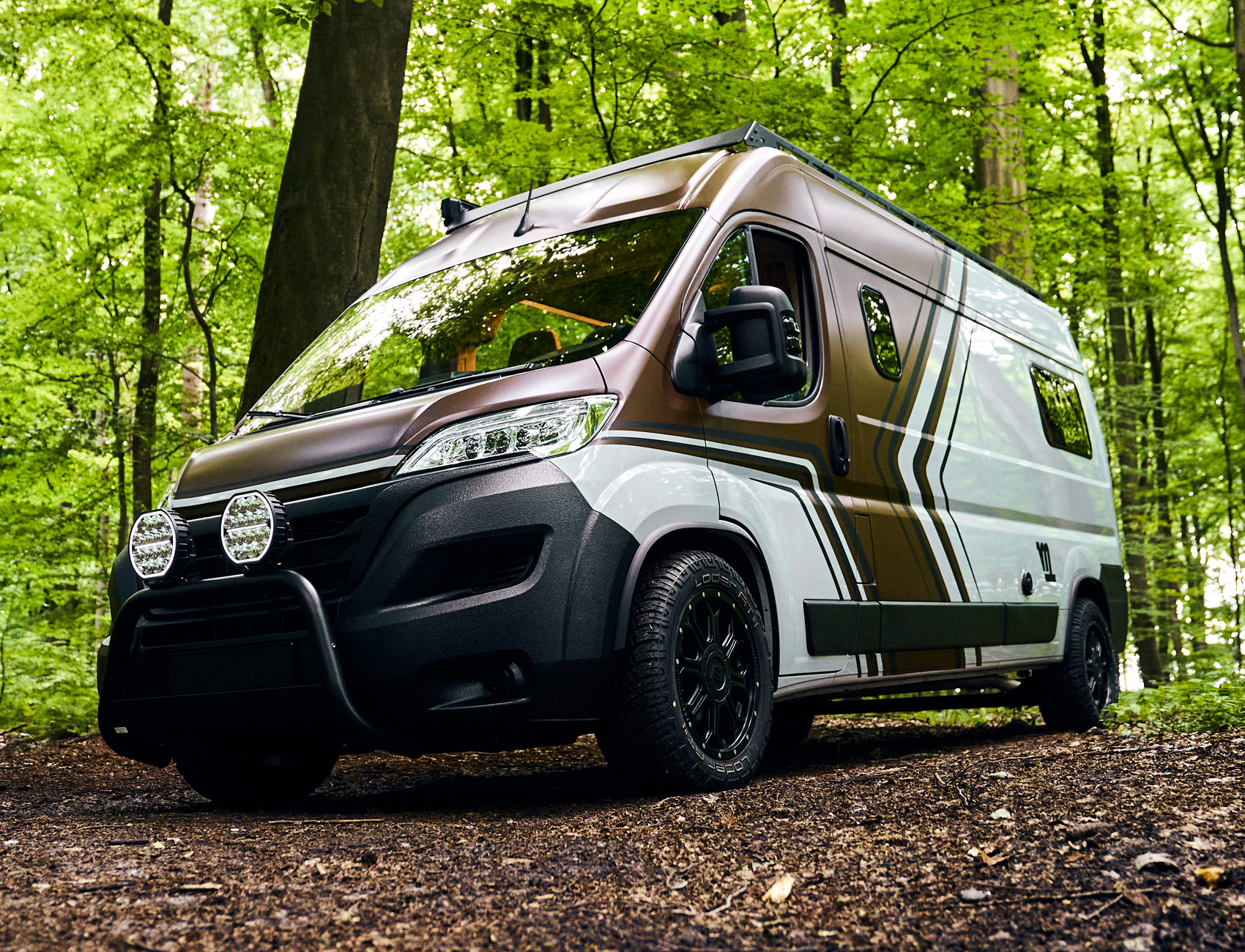
A third category has established itself between these extremes and is becoming increasingly important: all-wheel-drive panel vans such as the Mercedes Sprinter, Fiat Ducato, Peugeot Boxer, Volkswagen Crafter or Iveco Daily. These vehicles combine an astonishing amount of living space with genuine off-road capability – while remaining manageable in everyday life.
Why panel vans are becoming increasingly popular as an off-road base
The trend towards panel vans as an off-road base is no coincidence. If you think realistically about how often you really drive off-road and how often you drive on normal roads, you quickly end up with a ratio of perhaps 10 to 90. For this reality, a fully equipped four-wheel drive panel van is often the wiser choice than a genuine expedition truck.
The advantages are obvious: with a Mercedes Sprinter 4×4 or Volkswagen Crafter 4Motion, you can easily drive through city centers, park in normal parking spaces and fill up at any petrol station. You don’t need a truck driver’s license as long as you stay under 3.5 tons. And yet, with the right tires and a little ground clearance, you can get to places that are inaccessible to normal motorhomes.
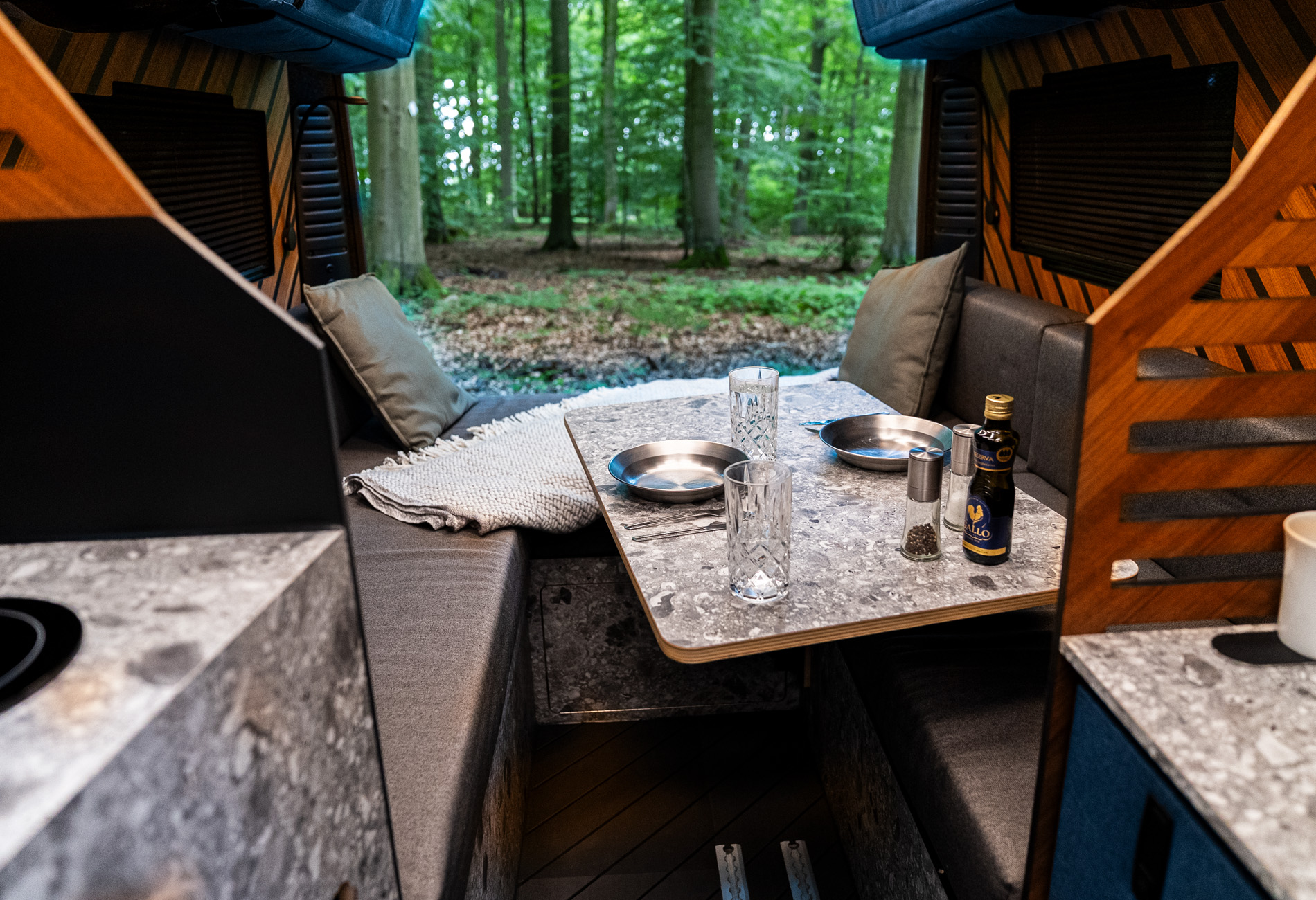
Today, professionally equipped panel vans offer a level of living comfort that was unthinkable ten years ago: fully equipped kitchens, wet rooms with showers, clever room concepts and self-sufficiency packages that make week-long trips possible. The difference to the classic expedition vehicle is shrinking – with significantly better suitability for everyday use.
Body concepts: Roof tent, living cabin or fixed extension?
In addition to the base vehicle, the question of the body is crucial. There is no clear winner here – just different philosophies with different advantages and disadvantages.
Roof tents are the cheapest way to get into off-road camping. They fit on almost any vehicle with a stable roof rack, weigh relatively little and allow the vehicle to be used in everyday life. The disadvantage is that you have to set up and take down the tent every time, there is no storage space in the tent and it is uncomfortable to move between the tent and the vehicle when it rains.
Pop-up cabins are popular with pickup truck owners, for example. The cabin sits on the loading area, but is not permanently attached. This allows flexibility, but also has disadvantages: There is no transition between the driver’s cab and the living area, and the payload is often limited.
Truck-based box bodies offer maximum space and comfort. The price for this: high acquisition costs, large turning circle, truck driver’s license and restrictions in narrow off-road passages. What’s more, anyone who has ever tried to find a parking space in an Italian old town with a 7.5-ton truck knows what we are talking about.
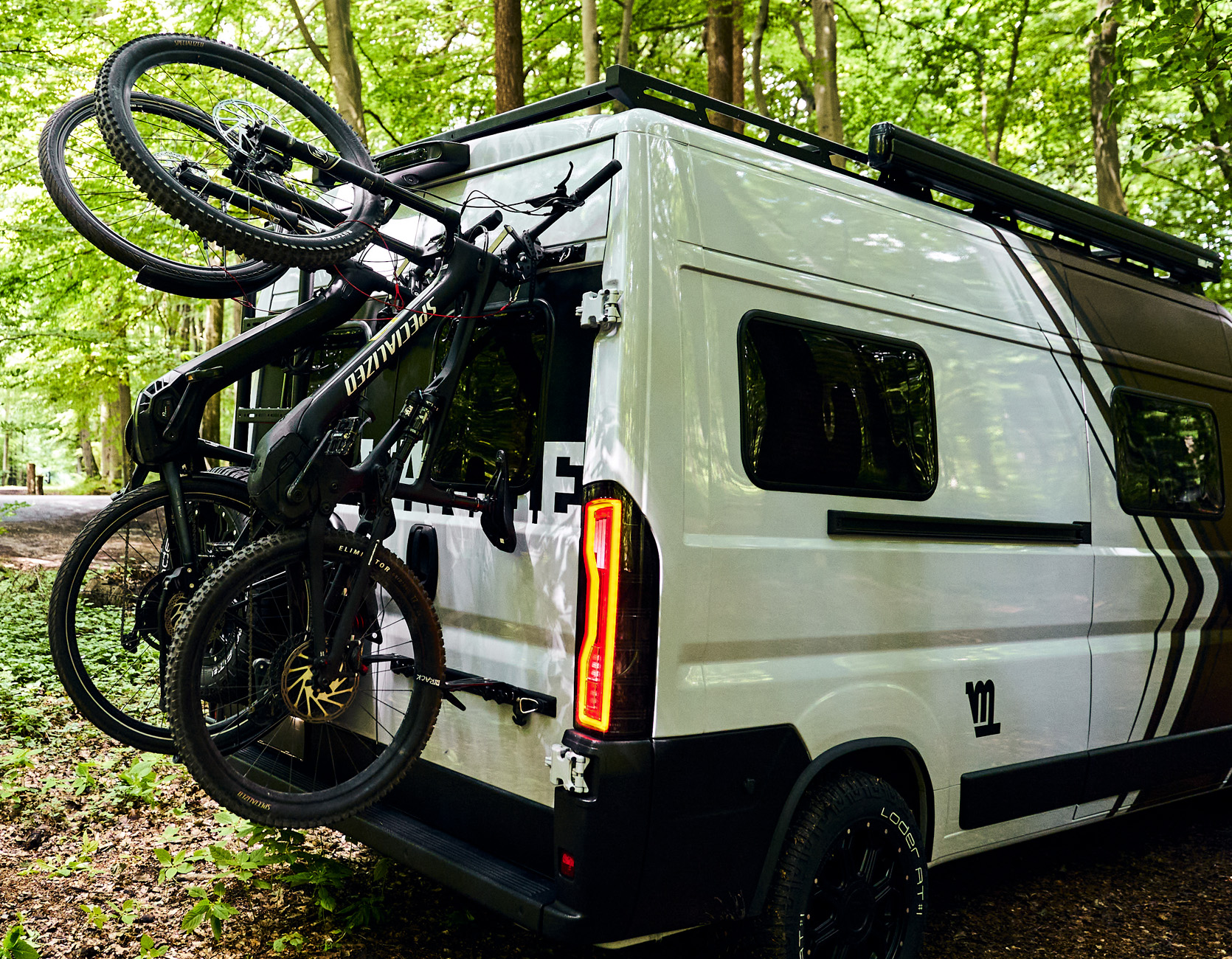
Fixed panel vans offer an interesting middle ground: the living area is directly connected to the driver’s cab, you can move to the rear while driving, and the vehicle remains compact enough for everyday use. Modern high-roof panel vans such as the Sprinter or Crafter offer headroom and a surprising amount of space – without the disadvantages of a real truck.
Self-sufficient on the road: independent of campsites
An off-road camper would only be half as interesting if you had to head for a pitch with a power connection every evening. The real attraction lies in the self-sufficiency – the ability to be on the road for days or even weeks without any external infrastructure.
In practice, this means large water tanks (often 100 liters or more), powerful solar systems combined with lithium batteries, efficient parking heaters for cold nights and sophisticated kitchen solutions that also work without shore power. Many off-road travelers also rely on separate dry toilets – not particularly glamorous, but much more practical than the chemical alternatives when you are far away from disposal stations.
How long the self-sufficiency lasts depends on your personal consumption. If you use water sparingly and have the electronics under control, a well-equipped vehicle can easily last for two weeks without replenishment. More is possible with additional canisters, water filters and efficient technology.
The advantage of panel vans: the more compact design means less weight and therefore more space for water supplies and equipment without immediately slipping into the next weight class. If you plan cleverly, you can stay under 3.5 tons – and thus keep your normal driving license.
Power supply in detail
For many off-road campers, the electrical system is the heart of self-sufficiency. Most systems are based on 12-volt technology, similar to vehicle electrics. Modern lithium iron phosphate batteries (LiFePO4) have largely replaced the old lead batteries – they are lighter, can withstand more cycles and can be charged more quickly.
Charging takes place in various ways: solar panels on the roof (typically 200 to 400 watts), a charging booster that uses the alternator while driving and, optionally, a 230-volt charger for shore power. If you plan cleverly, you can get away with solar power even in the Nordic winter – provided your consumption is right.
Typical consumers include a cool box, lighting, water pump, heating and chargers for cell phones and laptops. An inverter converts 12 volts into 230 volts if required, but consumes energy itself. Many experienced off-road travelers therefore do without 230-volt devices wherever possible.
Why an off-road camper at all?
That is the really interesting question. After all, off-road campers are more expensive, harder to drive and consume more fuel than normal campers. Nevertheless, more and more people are opting for these vehicles.
The reason is simple: freedom. Not the abstract kind from advertising brochures, but very concrete. You see a lake in the mountains on the map and no longer wonder whether there is a campsite there. You drive there. You find a secluded bay and spend the night there without booking in advance. You follow a gravel road because you’re curious to see what’s at the end.
This way of traveling is slower, often more exhausting, sometimes frustrating. But it leads to places and experiences that remain hidden to most travelers.
Off-road does not necessarily mean crossing the Sahara. The gravel road to the mountain lake in the Alps, the forest path in Sweden or the unsurfaced coastal road in Greece are also off-road – and a well-equipped four-wheel drive panel van is perfectly adequate for such routes. You don’t need a Unimog to experience adventure.
Popular destinations for off-road campers
An off-road camper opens up destinations that are difficult or impossible to reach with a normal motorhome. In Europe, these are mainly the mountain regions – the Pyrenees, the Alps and the Balkans. Countries such as Albania, Montenegro or North Macedonia still offer real adventures away from mass tourism, with gravel roads leading into remote valleys.
Scandinavia is a classic for off-road travelers: Norway with its plateaus and fjords, Sweden with its endless forest tracks, Finland and the North Cape. Everyman’s right makes wild camping possible there in a way that would be unthinkable in Central Europe.
Those who want to go further afield often end up in Morocco – for many Europeans, this is the gateway to real overlanding. The tracks in the Atlas Mountains and on the border with the Sahara offer everything the off-road heart desires: sand, scree, river crossings and spectacular landscapes. The infrastructure is good enough to get spare parts and diesel, but wild enough for real adventures.
Long-distance destinations such as Namibia, Botswana or the Pan-American Highway from Alaska to Tierra del Fuego also beckon. These are projects that take months or years and require appropriate preparation.
A point that is often underestimated: You don’t need an extreme expedition truck for most of these destinations. A well-built Sprinter 4×4 or Crafter 4Motion can cope with 95 percent of the routes you will realistically drive – and will cause significantly less stress on the journey through France or Spain than a 7.5-ton truck.
VANME: When you want your off-road camper to be more than just a compromise
At VANME in Hamburg, we understand that an off-road camper must meet two seemingly contradictory requirements: robust enough for the gravel road, comfortable enough for week-long trips. We have been converting panel vans into individual motorhomes for years – with a focus on quality, durability and well thought-out details.
Our conversions are based on proven all-wheel drive platforms such as the Mercedes Sprinter 4×4 or Volkswagen Crafter 4Motion. Every project starts with a detailed discussion: What do you have in mind? Where do you want to go? How long do you want to be on the road? Only when we have understood your requirements do we develop a concept – tailor-made, not off-the-peg.
What sets our off-road conversions apart: high-quality materials that can withstand rough use. Clever use of space that gives nothing away. Self-sufficiency systems that really work. And workmanship that keeps its promises even after years on unpaved roads.
Every off-road camper is different
What also makes off-road campers special is that hardly any two are the same. While normal motorhomes often come off the production line and only differ in color, the off-road scene is characterized by self-built vehicles, individual conversions and very personal solutions.
Modular furniture systems that can be converted as required. Robust materials such as aluminum and stainless steel instead of delicate veneer. Well thought-out storage space solutions, because every centimeter counts on long journeys. Some people build their vehicle completely themselves, others buy a base and customize it. The result is always a unique vehicle that perfectly matches the owner’s travel style.
DIY culture is an essential part of the scene. Building plans are shared, problems discussed and solutions developed in forums and Facebook groups. If you are talented and have the time, you can save a lot of money. Those who don’t – or who want a professional result right from the start – can find specialized manufacturers who offer everything from simple camping modules to fully-fledged off-road motorhomes.
In recent years, a conversion scene has developed for panel vans in particular that delivers impressive results. High-end conversions with well thought-out layouts, high-quality materials and clever off-road adaptations – all in a vehicle that you can easily use in everyday life.
What does an off-road camper cost?
The honest answer: it depends. It ranges from a few thousand euros to well into the six-figure range.
At the lower end is a used off-road vehicle with a roof tent. An older Suzuki Jimny or Mitsubishi Pajero is available for 5,000 to 10,000 euros, a decent roof tent costs 1,500 to 3,000 euros. With a bit of camping equipment, you can be there for less than 15,000 euros. It’s not luxury, but it works.
The mid-range vehicles are Defenders, Land Cruisers or pickups with a cabin. A usable used Defender now costs 25,000 to 40,000 euros, a Land Cruiser HZJ 78 often even more. Add to this the conversion, equipment and various modifications – and you quickly end up with 50,000 to 80,000 euros.
Professionally equipped all-wheel-drive panel vans cost between 120,000 and 380,000 euros, depending on the basic vehicle and equipment. That sounds like a lot, but it is put into perspective when you consider what you get for it: a fully-fledged motorhome with off-road capabilities that is also suitable as an everyday vehicle and can be driven with a normal driving license.
Professional truck-based expedition vehicles start at around 150,000 euros for basic used vehicles. There are hardly any upper limits: New vehicles from specialized manufacturers cost 300,000, 500,000 or 2,000,000 euros – and still find buyers. Whether you need to go to this expense depends very much on how and where you want to travel.
In addition to the purchase costs, there are ongoing expenses: Insurance, tax, maintenance, repairs. This is where panel vans score again: spare parts for Sprinter, Ducato or Crafter are available worldwide and any workshop can work on them. The situation is different for exotic expedition vehicles.
Approval, TÜV and legal issues
Anyone who converts or upgrades their off-road camper themselves will sooner or later have to deal with the TÜV. Many conversions are subject to registration – from raising the height to winches and permanently installed furniture. A good inspector who knows the scene is worth its weight in gold.
Depending on the configuration, it may make sense to convert the vehicle into a motorhome. The requirements: permanently installed sleeping berths, cooking facilities and a table with seating. The advantage: cheaper insurance and tax. The disadvantage: stricter regulations for the main inspection and lower payload.
With imported vehicles – such as a Land Cruiser from Japan or a former US military vehicle – things get more complicated. Individual approvals are required here, and depending on the year of manufacture and origin, additional certificates may be required for exhaust emissions, noise levels or lighting.
The situation is much simpler for panel vans: Sprinter, Ducato, Crafter and the like are standard vehicles registered in Germany. Converting them into motorhomes is an established process that is routinely carried out by experienced manufacturers. All conversions are documented, registered and approved – without any nasty surprises at the next general inspection.
What you should know before you join
As appealing as it all sounds – an off-road camper is not a vehicle for everyone. You should be realistic about a few things:
Size and maneuverability: the larger the camper, the more comfortable it is to live in – but the more limited the off-road capability. A compact panel van can negotiate narrow serpentines where a large expedition vehicle would have to give up long ago. Finding the golden mean between living comfort and off-road capability is one of the most difficult decisions to make.
Maintenance and wear: off-road driving puts a strain on materials. Vibrations on gravel tracks, stone chips on the underbody, water passages – all these things leave their mark. If you regularly drive off-road, you also need to service your vehicle regularly. That is part of it.
Comfort has its limits: off-road travel is original. Not every route is pleasant, not every pitch is flat, not every weather is inviting. Anyone who has problems with this will not be happy with an off-road camper.
Driving skills are necessary: off-road driving needs to be learned. Choosing the right line, assessing obstacles, controlling the vehicle at its limits – this doesn’t come naturally. There are off-road courses and training grounds that make it easier to get started. The investment is worthwhile before you damage your vehicle on the first serious off-road terrain.
One advantage of panel vans in this context is that their handling is much closer to that of a normal car than a truck. Anyone who can safely control a Sprinter or Crafter on the road will also find it easier off-road.
Important equipment for off-road campers
In addition to the vehicle itself, there is equipment that is indispensable on longer off-road tours. Here are the most important points:
- Recovery material: Sand plates (also known as traction mats) help when the wheels are spinning. A cable winch is almost mandatory for serious terrain – whether electric or mechanical depends on the vehicle. In addition, shackles, tree belts and recovery rope for working with other vehicles.
- Spare parts and tools: At least one full-size spare wheel, preferably two. V-belts, fuses, glow plugs or spark plugs, oil and coolant for topping up. Plus tools that fit your vehicle – and the knowledge to use them.
- Navigation: GPS is helpful, but is no substitute for maps. In remote areas there is no mobile phone network for online navigation. Paper maps of the region, a good off-road GPS and possibly a satellite phone for emergencies are part of the basic equipment for long-distance travel.
- Water treatment: A good water filter extends self-sufficiency considerably. Modern systems reliably filter out bacteria and protozoa – river water becomes drinkable. Almost indispensable for longer trips to remote areas.
A practical aspect of common panel vans: you can find spare parts for Sprinter, Ducato or Crafter almost anywhere in the world. There are Mercedes and Fiat workshops in every country with a reasonably functioning infrastructure. With exotic base vehicles, however, finding spare parts can be a real challenge.
The off-road community: more than just vehicles
Those who immerse themselves in the off-road world quickly find like-minded people. The scene is smaller than the classic motorhome community, but is often more closely networked. Regional regulars’ tables, organized trips and specialized trade fairs such as Abenteuer Allrad in Bad Kissingen bring people together who share the same hobby.
Online communication takes place via forums such as the Allrad-LKW-Gemeinschaft forum, Facebook groups for specific vehicle types and, more recently, YouTube channels that document their travels. The willingness to share knowledge and help newcomers is generally high. If you ask nicely, you will get answers – often more than you originally asked for.
When traveling, the community shows its best side: when a vehicle is parked on the side of the road, the next off-roader stops and asks if help is needed. Tools are lent out, experiences are exchanged and sometimes friendships are formed that last for years.
Tips for your entry into the off-road world
If you’re thinking about entering the world of off-road campers, you don’t have to buy an expensive expedition vehicle straight away. Here are a few recommendations to get you started:
- Start small: A used off-road vehicle with a roof tent is enough for your first experiences. This will help you learn what is important to you and what is not – before you invest a lot of money in a large extension.
- Attend courses: Off-road courses teach the basics of off-road driving in a safe environment. Many providers have rental vehicles so that you can gain your first experience without your own vehicle.
- Use the community: The off-road and overlanding scene is ready to help. Forums, Facebook groups and local regulars’ tables offer knowledge, an exchange of experiences and sometimes the opportunity to come along on rides.
- Seek professional advice: If you are seriously interested in an off-road conversion, you should talk to specialized manufacturers. Experience shows that good advice at the beginning saves a lot of money and frustration later on. Reputable customizers will take the time to understand your requirements – and will also tell you honestly if your ideas are unrealistic.
- Define realistic requirements: Think carefully about how you want to travel. You don’t need an extreme expedition truck for most off-road adventures in Europe, Morocco or even Namibia. A well-equipped four-wheel drive panel van is sufficient for almost all realistic scenarios – and is much more fun in everyday life.
Who is an off-road camper right for?
If you’ve read this far and are still interested, you probably belong to the target group. Off-road campers are for people who are looking for real independence. Who prefer to be away from crowded campsites. Who are prepared to take on technical challenges instead of avoiding them. Who want to travel flexibly and spontaneously without having to plan everything in advance.
The range is wide: from a minimalist roof tent on an off-road vehicle to a fully equipped motorhome, everything is possible. The common denominator is not the vehicle itself, but the way of traveling.
For many, the professionally equipped four-wheel drive panel van is the best compromise: enough off-road capability for real adventures, enough comfort for longer trips and enough suitability for everyday use to make good use of the vehicle between long tours. You park it in front of the supermarket, drive the kids to school – and at the weekend you can hit the gravel road.
Off-road trips at any time of year
Unlike classic camping, off-road travel is not limited to the summer. With the right equipment – especially a good parking heater – winter tours are also possible. Scandinavia in the snow, the Alps in powder snow, even Iceland in winter: Everything is possible if the vehicle is prepared accordingly.
Of course, winter poses additional challenges: Diesel pre-heating, insulated water pipes, more battery capacity for the heating. But it is precisely these challenges that make it so attractive. And the parking spaces are guaranteed to be empty in winter.
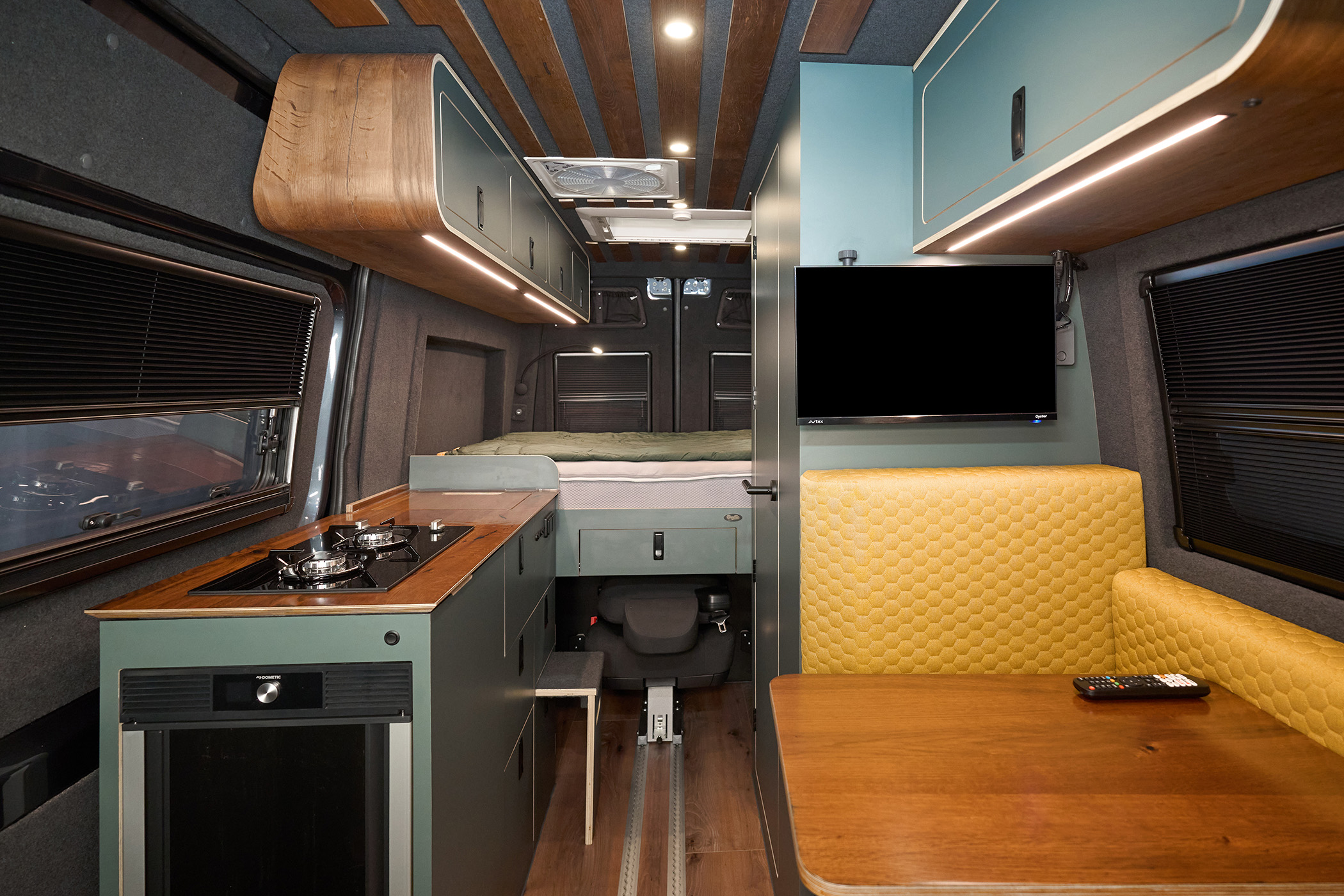
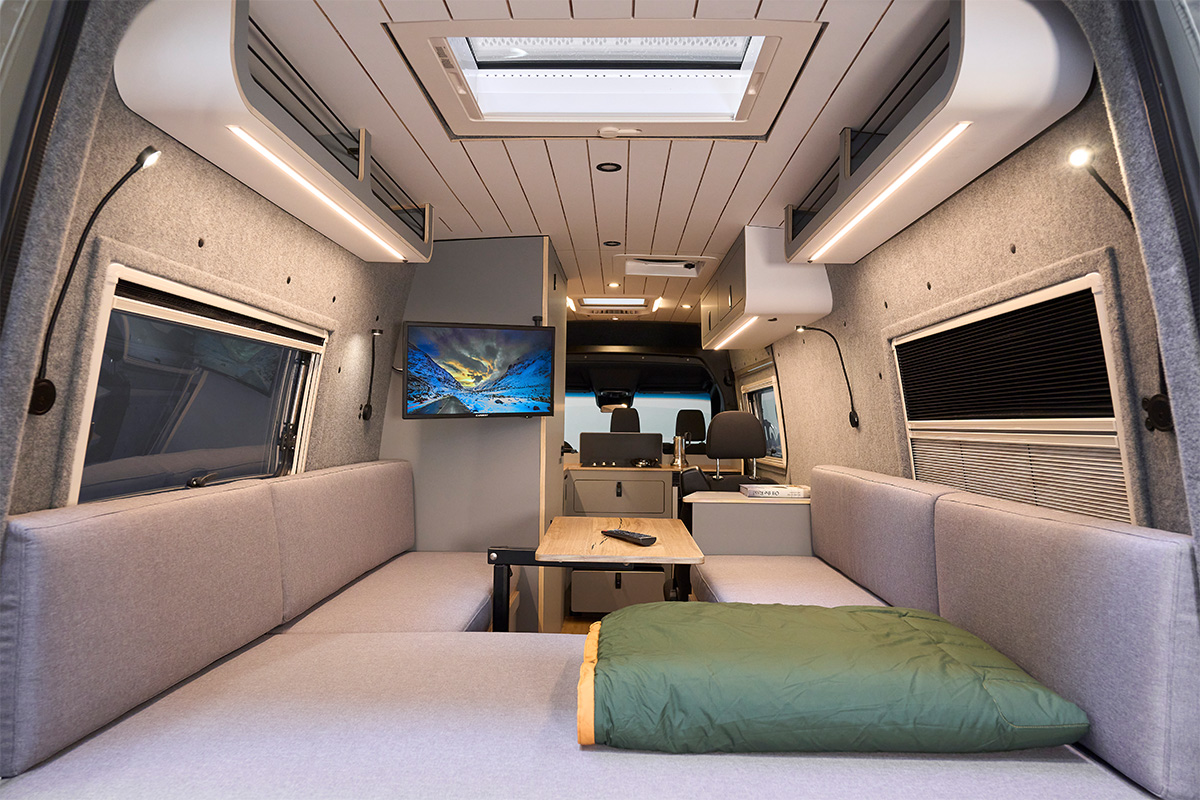
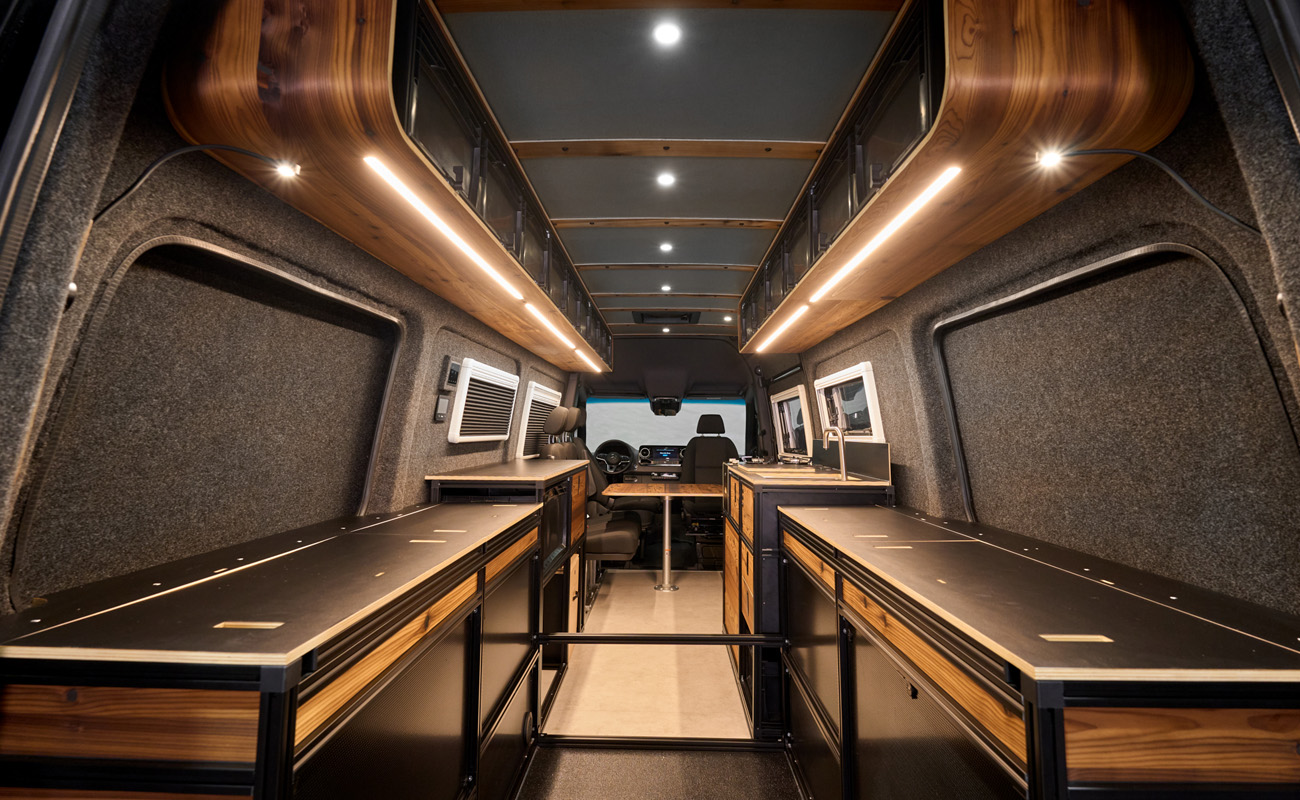
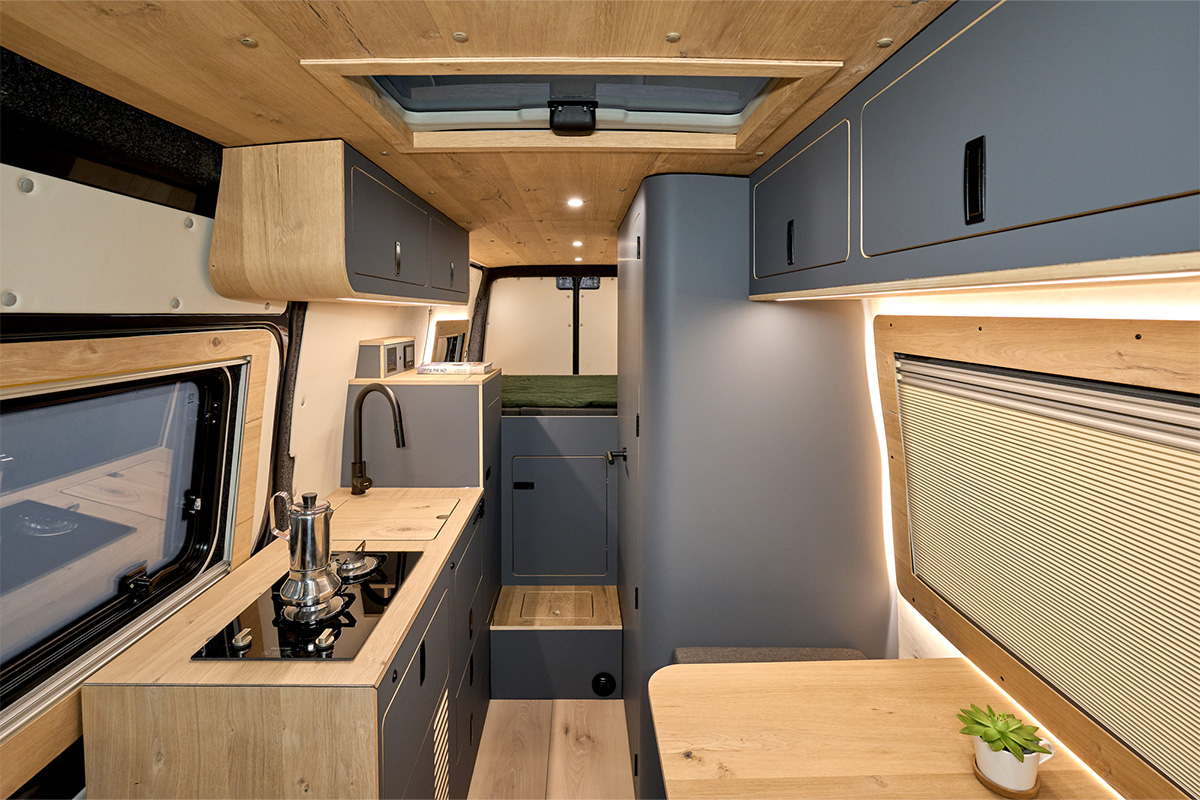
Examples of our off-road campers
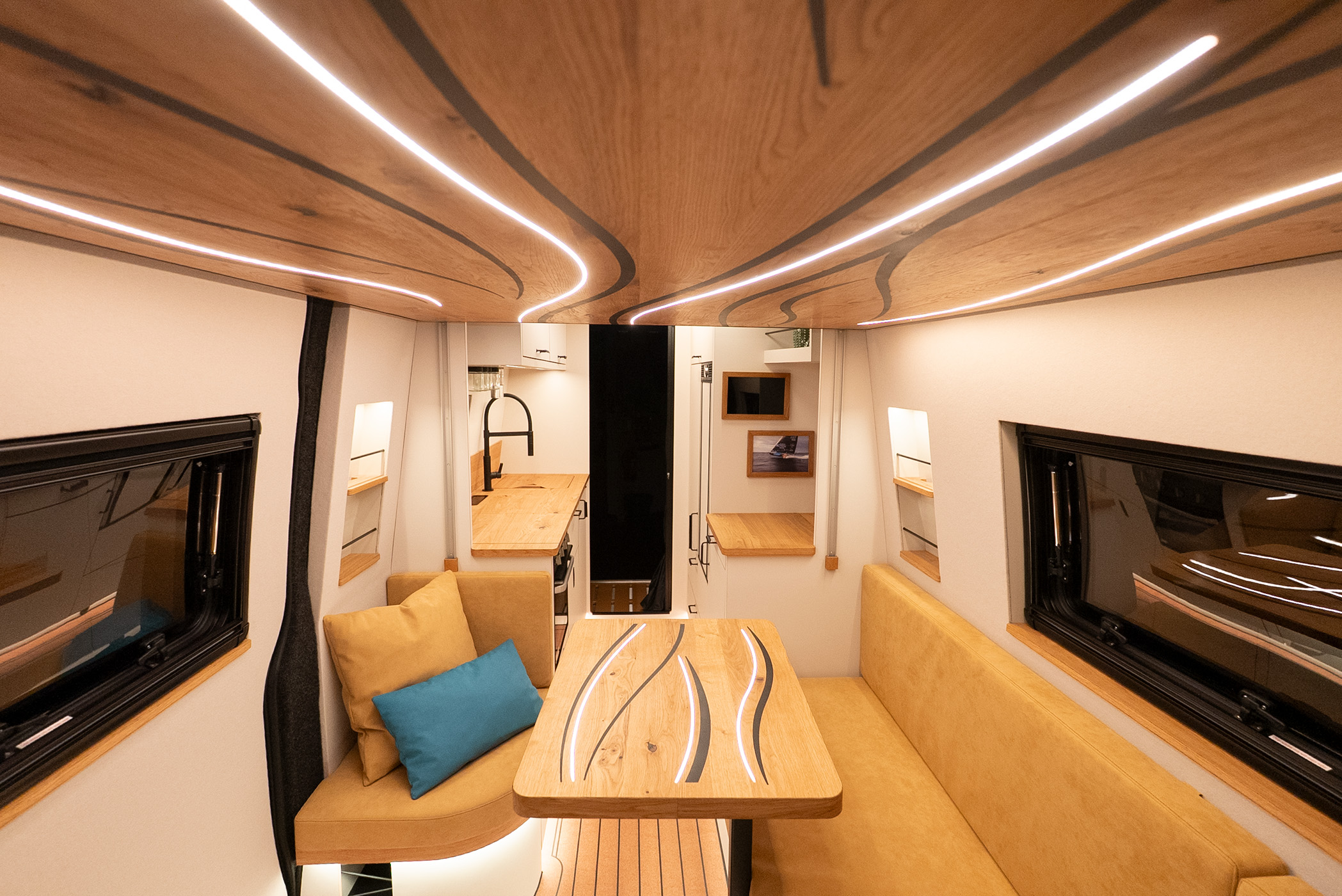
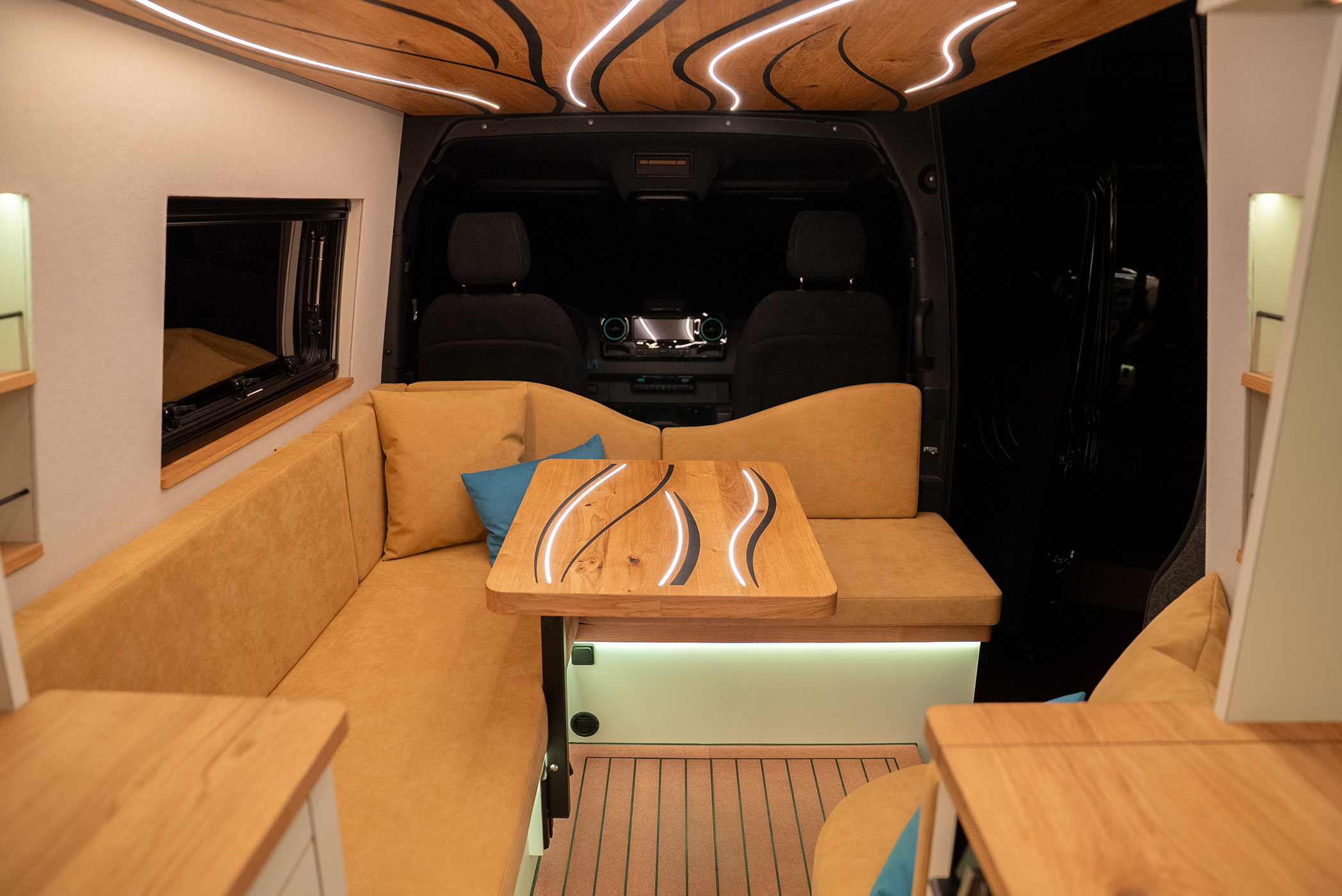
Are you looking for a manufactory for individual interior fittings? Let us inspire you with some of our interior design projects.
Frequently asked questions about the off-road camper
Where asphalt ends, your story begins
An off-road camper is not a rational decision in the classic sense. It consumes more fuel, costs more and requires more attention than a normal campervan. But it opens up a different way of traveling – one that is not tied to road maps and does not end at gravel roads.
Anyone who has ever experienced this – the sunrise on a lonely mountain lake, the silence of a desert night, the feeling of having really arrived in a place that hardly anyone knows – will understand why people drive these vehicles.
The good news is that you don’t have to buy a Unimog or get a truck driver’s license. A professionally converted all-wheel drive panel van will take you to most places you want to go – and remains a vehicle that you can use every day. The technology is sophisticated, the converters have years of experience and the community is bigger than ever.
The rest is planning. And that starts with a conversation. Let’s talk about your project – what trips are you planning, what requirements do you have, what is important to you? Together, we’ll find out which vehicle concept suits your travel style. Non-binding, honest, at eye level.
Because in the end, it’s not about the perfect vehicle. It’s about the places you will reach with it.